
Artist Spotlight: Marco Brodde SWLA
/ Society of Wildlife Artists
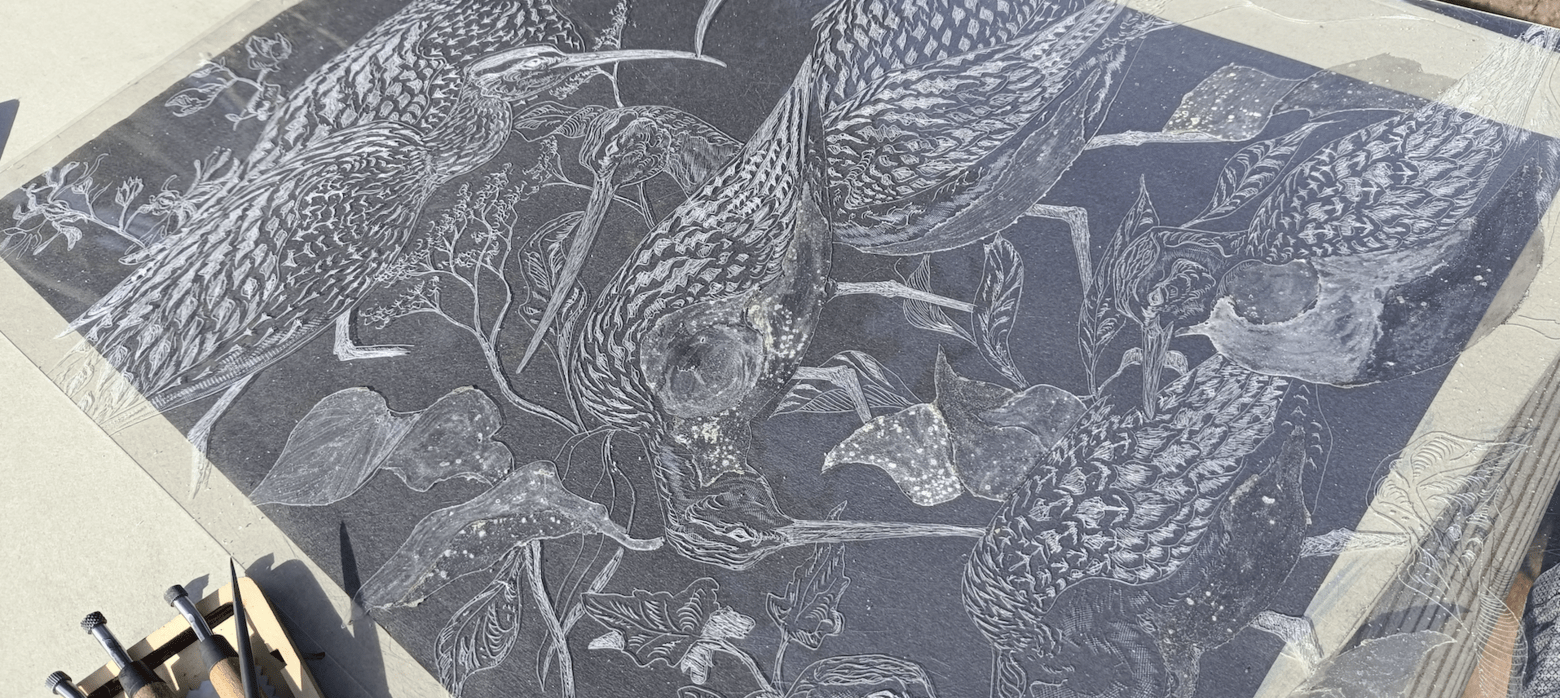
The Society of Wildlife Artists Annual Exhibition, The Natural Eye 2025 is now open at Mall Galleries, running from 16 October to 25 October.
We spoke to Marco Brodde SWLA, a wildlife artist and naturalist exhibiting in this year's exhibition about his practice.
Could you briefly introduce yourself and your artistic background?
I am Marco Brodde, Danish and 51 years old. I was born and raised on the Danish west coast in the Wadden Sea Region. For 25 years, I have been working as a nature interpreter and educator on the island of Fanø, where I live in a house from 1825. Fanø is one of the many barrier islands on this extraordinary tidal landscape, which is shared between three nations; Denmark, Germany and the Netherlands. Since my teenage years I have been drawing and sketching birds daily, wanting to capture not only the character of the species but also the atmosphere in the environment and the landscape. For many years I have also been engaged in nature conservation and the landscape through different roles in Birdlife Denmark and The National Park Wadden Sea. About 15 years ago, I started focusing on my art and learnt about the Society of Wildlife Artists. As an artist focusing on field work it was like 'coming home', and at the same time extremely inspiring. Today I run my own gallery on the island and recently I took the step towards being a full time artist.
'[When I] learnt about the Society of Wildlife Artists as an artist focusing on field work, it was like coming home'
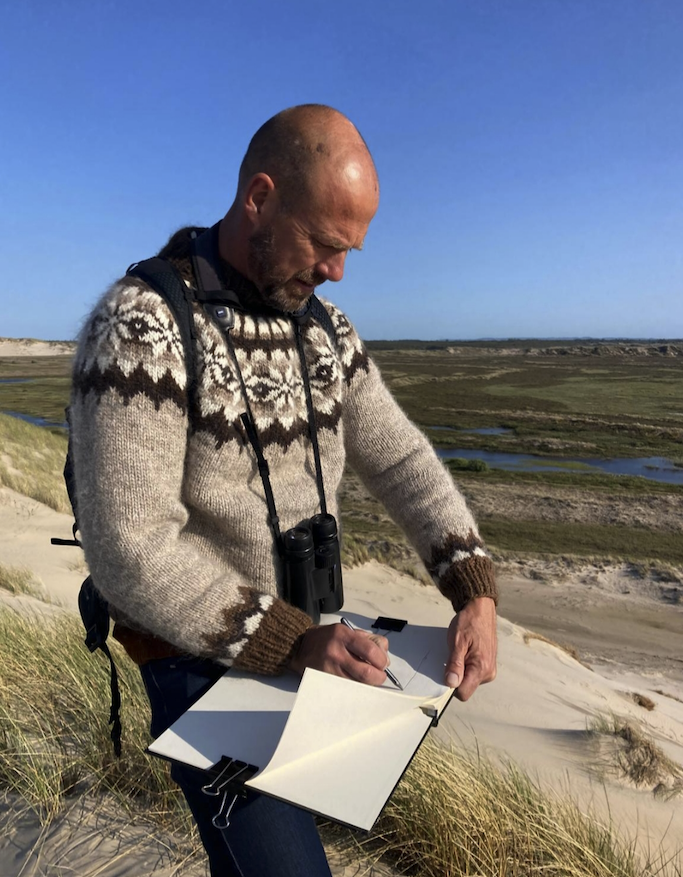
Living in the middle of the Wadden Sea World Heritage Site, your surroundings are deeply embedded in your work. How do you see this landscape shaping your work, and the way you view nature?
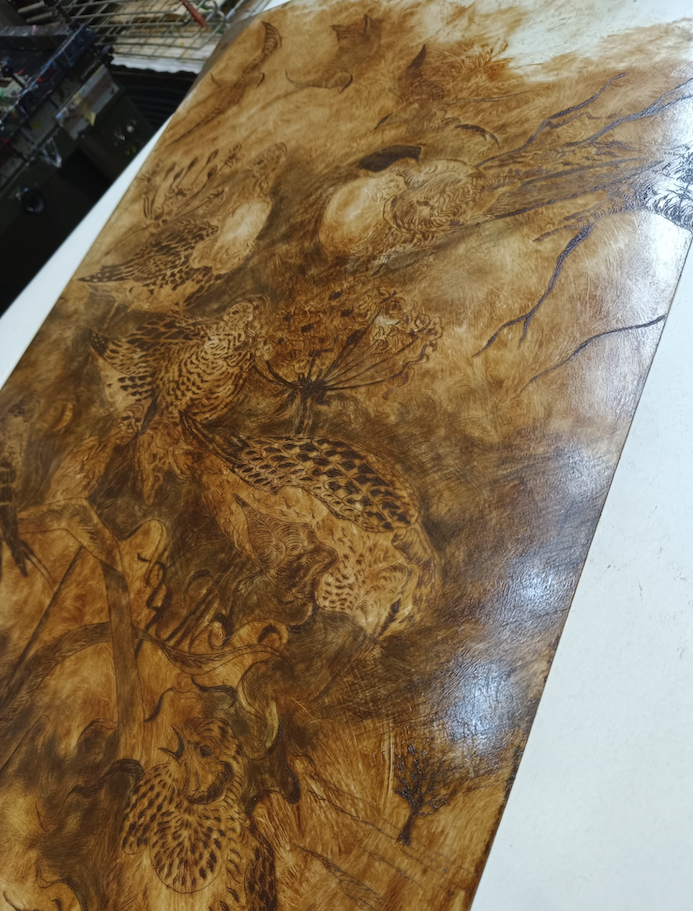
The work I show in this year's exhibition is mostly about birds themselves, and you could say the place does not stand out. But the drypoint prints are all based on direct observation while out and about in the Wadden Sea, and specific plant species actually fix the birds to the place. That is essential to me. Details such as plants found on the salt marsh, in the meadows or dune land offer lines and structure, which can mirror elements in the birds or offer a juxtaposition and create energy. It is sometimes subtle, but the sense of place is there, I hope. The roots of field sketches and the love of the landscape is felt in the finished print.
My watercolour landscapes tell a story more directly about the extremely dynamic nature of the Wadden Sea, where sand, water and wind constantly change the landscape. Or they say something about the terrain on the inner side of the sea wall, where we have drained the former marshes for centuries. I find these contrasts very interesting as it reveals a lot about mankind's vision for the natural world through history. Today we acknowledge the wilderness in the Wadden Sea as a World Heritage Site, but still proudly tell the story of how we have been able to control water since the medieval times. This history influences my work, and an Oystercatcher in the Wadden Sea is different to an Oystercatcher at any other location. But hopefully the artwork can also speak to an audience from other regions and countries, as we share both the birds and these kinds of experiences and paradoxes with each other.
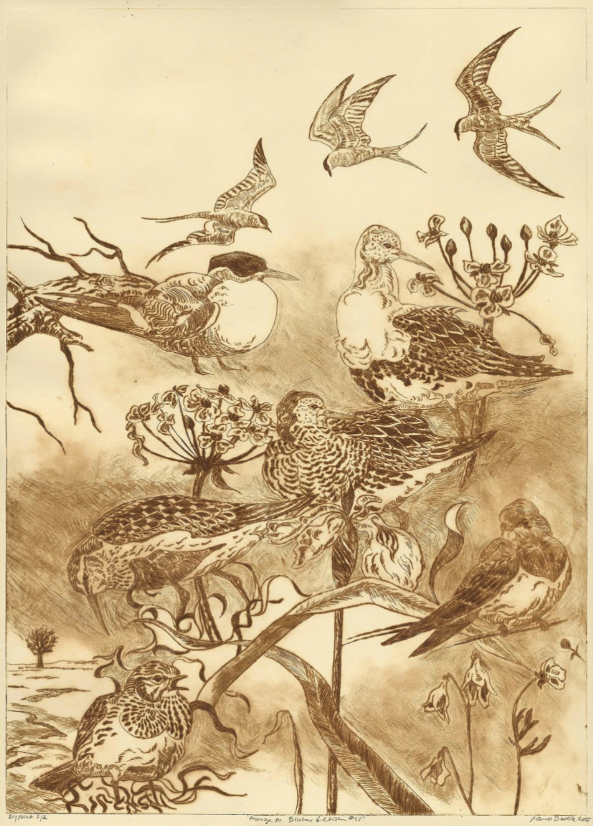
Printmaking, linocuts and drypoint are key mediums in your work. What draws you to these and how does this translate when working in the field?
At some point 15 years ago, I felt a desire to learn a new technique. Back then I was still kind of trapped in an ambition to paint detailed bird portraits, but I was bored by the preciseness of small single feathers on the back of Red Knots, Little Stints and all the other waders passing by. I always enjoyed watching my grandfather working in his workshop with wood and different tools. He was a carpenter. The craftsmanship itself fascinated me somehow, but I had no knowledge about such things - and I still haven't, really. But the way of working with an old-school press and the processes and magic connected to the wisdom of printmaking lit my fire. The perfect combination of creativity and craftsmanship where you can always learn more about both the technical side and how to create unique motifs.
Up until now I have developed my drypoint prints in the studio based on the field sketches, but in spring this year I worked for a week outside with the plates, just as if it had been a plein air watercolour piece. This was during the SWLA project on Massingham Heath in Norfolk, which is running until May 2026. The whole project is about being out there so I was forced to take the plates with me, and I will continue to do so from now on.
You have described experiencing birds 'through drawing, colour and lines' as essential to your life. Could you tell us a little more about how observation and artistic expression help you connect with nature?
In my job as a nature educator, I have often asked children (and adults too) to do quick sketches while we are out there. If you carefully stress that it is not about the quality of the drawings or something to be framed, even kids who are unfamiliar and uncomfortable with drawing will give it a go. When we draw something from life we pay attention for just a short while, even if it is just 2 minutes. And you can have a conversation about what we have noticed in the landscape on completely the same level. The moment you have sketched a new part of a landscape, you will recognise it forever, when you drive by it, maybe even value it as a friend, because you know it. That is the first step in developing a connection to anyone, a place or another species. It is actually the basic value of all of this.
What impact has being a member of the Society of Wildlife Artists had on your practice?
The members of the SWLA share the ambition to really know the subject of wildlife through observing and sketching in the field. It is difficult to sketch living wild animals and you spend the rest of your life learning. No matter what creative ideas the artist presents or how the personal encounter with the specific species on that day is interpreted, the knowledge of the living creature is crucial. It leaves the artist in a constant dance where art and science balance each other. I was struggling with that for many years (and still am) but the many different approaches among the members of the SWLA showed me that wildlife can be portrayed in so many different interesting ways and all together talk to us with a strong voice. My own journey as a member has been challenging too, with an ambition to develop as an artist after all these years as a traditional bird sketcher. And the membership very much continues to keep me going despite living abroad.
Finally, do you have a favourite work you are exhibiting in the SWLA Annual Exhibition? If so, why?
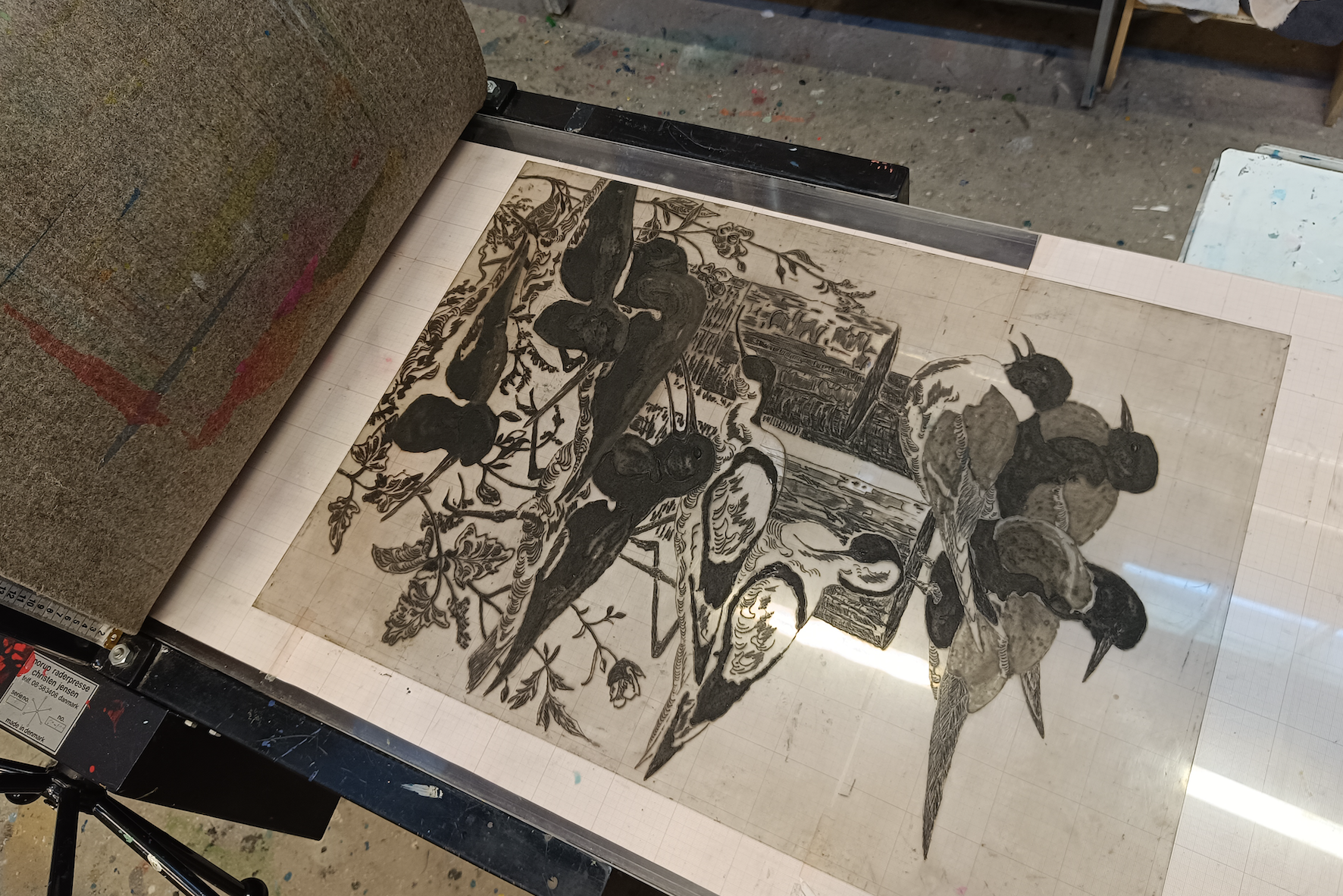
Well, the piece called 'Wadden Sea World Heritage II' is developed through two different printmaking techniques, one of them new to me. The lines in the motive contrast with the more solid blocks of ink. These are transferred to the plate by using a paste of carborundum which you can mix in different ways, leaving areas on the plate more or less dark. In theory you can control the different tones in your image, but it's really challenging for your inner craftsman. I learned the technique from Bruce Pearson, who is constantly pushing himself in new directions. Very inspiring and an example of how we can all benefit from the SWLA.
The smaller piece of the Robin on the children's suitcase is another favourite of mine. I have had the sketch for years in my sketchbook and think there is a fairytale still not told hidden in the narrative.
SWLA Annual Exhibition 2025
Marco Brodde's work is on display as part of The Natural Eye 2025. The exhibition is running from 16 October until 25 October at Mall Galleries.