
Artist Spotlight: Alex Lidagovsky HRBA
/ Royal Society of British Artists
The Royal Society of British Artists Annual Exhibition 2026 is open at Mall Galleries until 7 March.
We spoke to Alex Lidagovsky RBA, a Ukrainian sculptor exhibiting at the Annual Exhibition, about his work and practice.
Please could you introduce yourself?
I am a Ukrainian sculptor, Alexander (Alex) Lidagovsky. Even before moving to the United Kingdom, I used a shortened version of my name on Instagram so that it would sound shorter and more memorable. In Ukrainian tradition, a name is flexible and variable. Abbreviations and different diminutive forms are common and do not cause confusion. In Britain, the traditions are different. A name is fixed, almost set in concrete. After moving here, I decided to use the shortened form Alex not only to make it easier to pronounce and remember, but also as a way of dividing my life into a before and an after.
Can you tell us a little about your life and practice in Ukraine before moving to the UK?
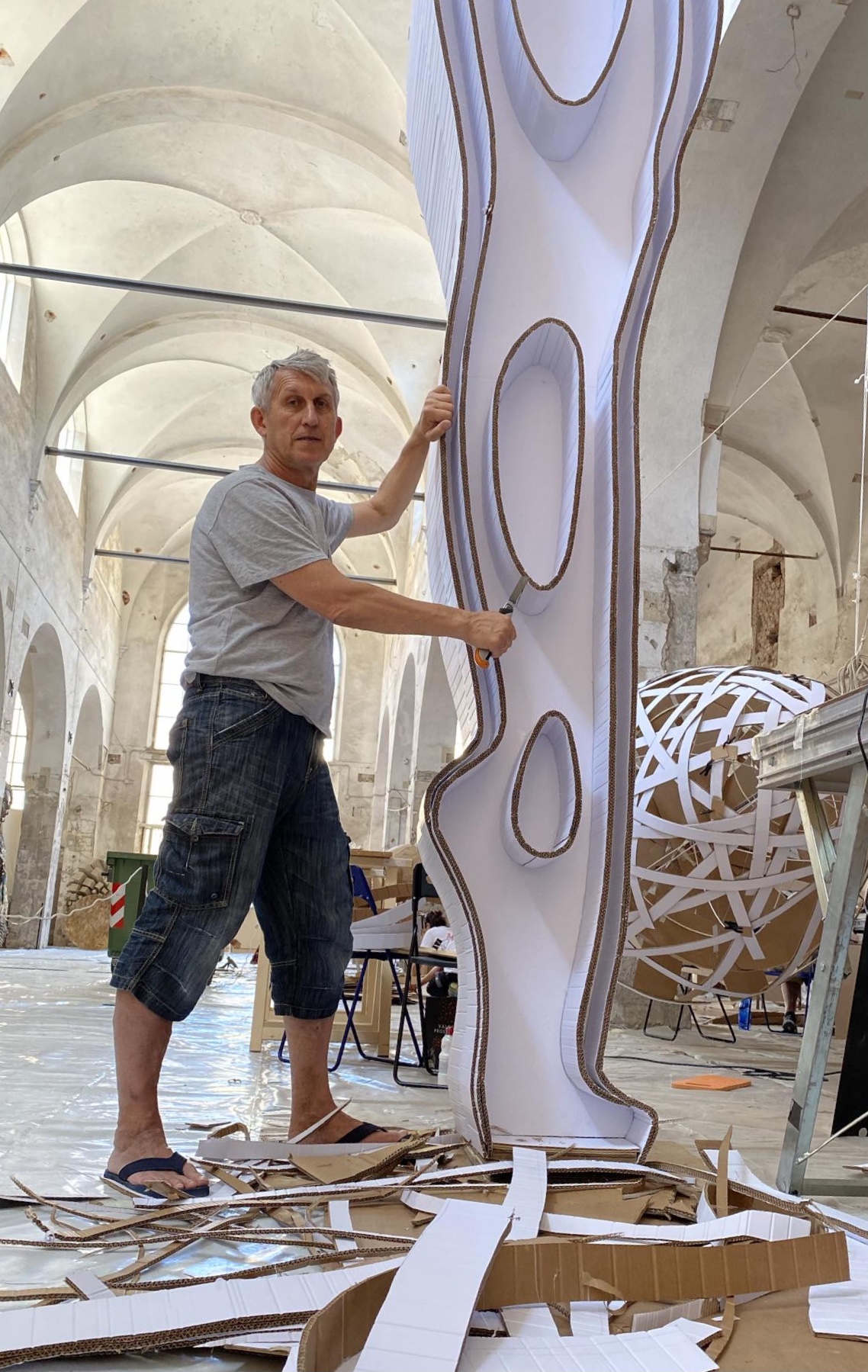
In Ukraine, I was a fairly well-known and sought-after artist. I managed to realise many of my art projects there. I not only exhibited my work but was also actively engaged in the field of public art. This field was particularly important to me. As I witnessed a time when, across the territory of the former Soviet Union, public art practically did not exist. All public sculpture consisted of monuments carrying ideological weight and promoting the doctrines of communism. Interestingly, even today, many people across the post-Soviet space consider any sculpture placed in a street or park to be a monument. For many, a monument is synonymous with sculpture. What I wanted was for art itself to appear in public space, with its own agenda and its own questions. I wanted to bring it closer to people who do not visit museums and galleries, to expand both the audience and the context of the “white cube.” I have always been interested in working with space. I am drawn to the dialogue between my work and both contemporary and historical architecture. In total, I have installed more than twenty sculptures in public spaces in Ukraine, mainly in Kyiv, but also in other cities. It is difficult to give an exact number, as some of them have been relocated to safer places due to ongoing shelling. However, most of my works remain where they were originally installed, open and accessible, despite everything. I am glad that my sculptures are living through this difficult time together with my fellow citizens.
Has your practice changed in any way since moving to the UK, and if so, how?
Yes and no. First of all, the external context has changed. The surrounding world has changed. Perhaps for those who continue to live within familiar and habitual realities this is less noticeable than it is for us, people who have been uprooted from our roots and from what once felt normal, but for me these are obvious things, and sooner or later everyone will feel them. The old world no longer exists. We still see its echoes, like the light of a distant star that is already gone, yet whose light still reaches us.
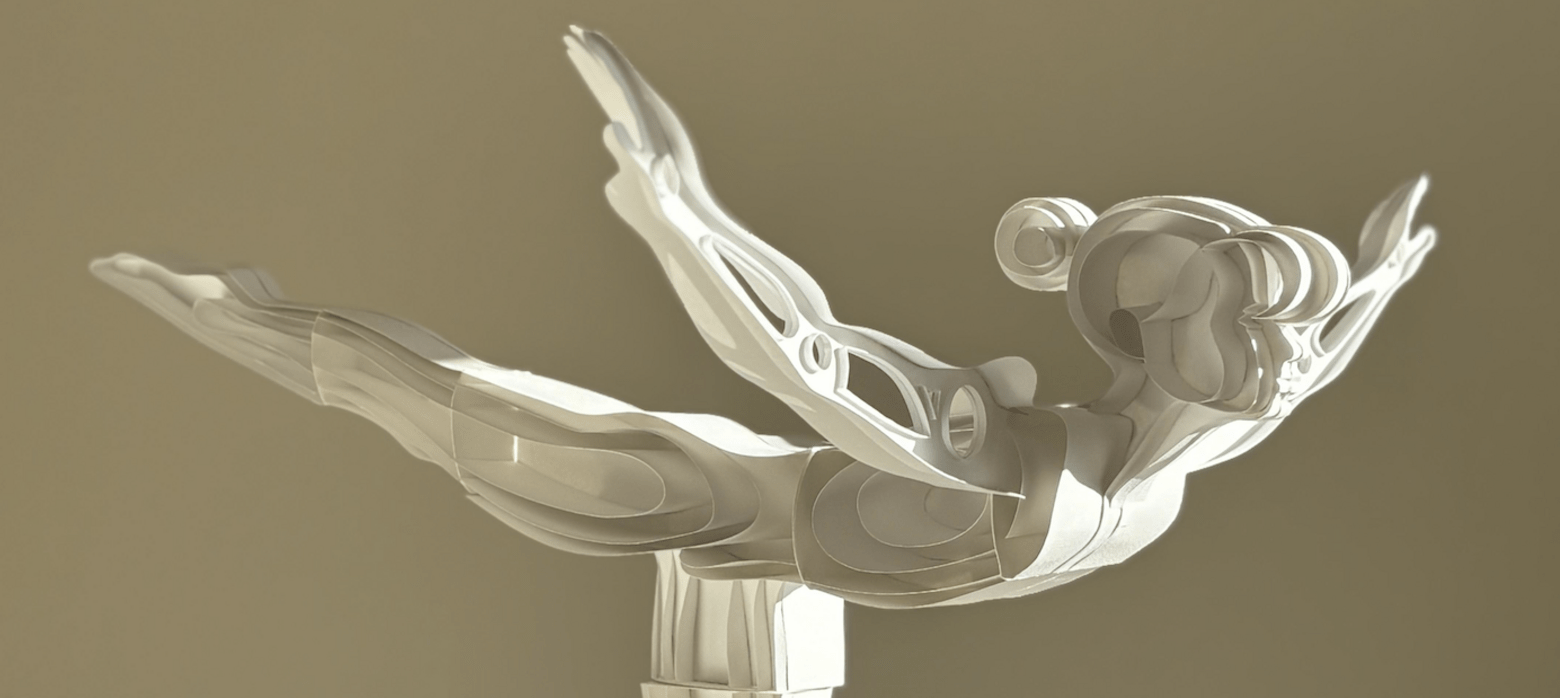
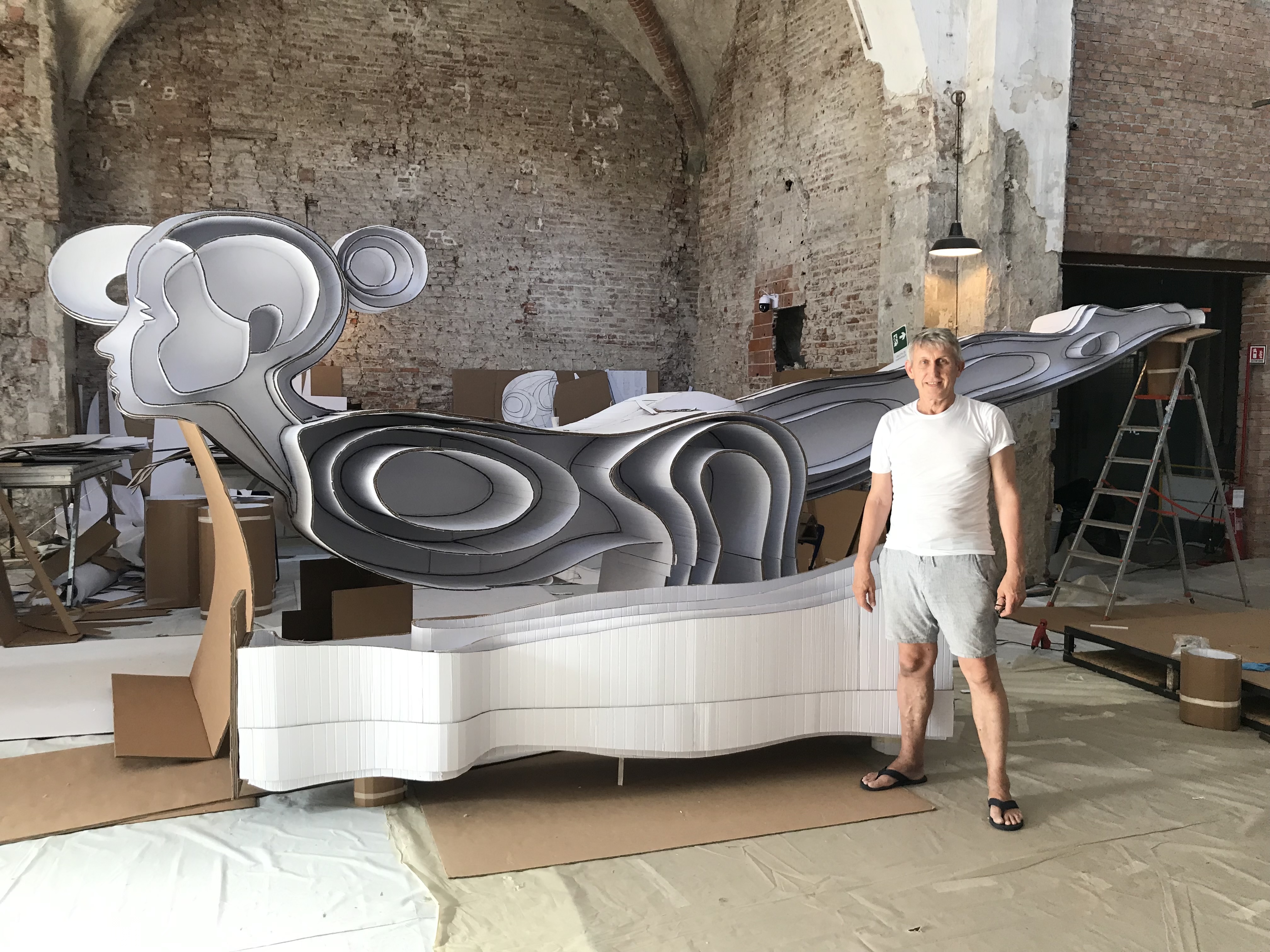
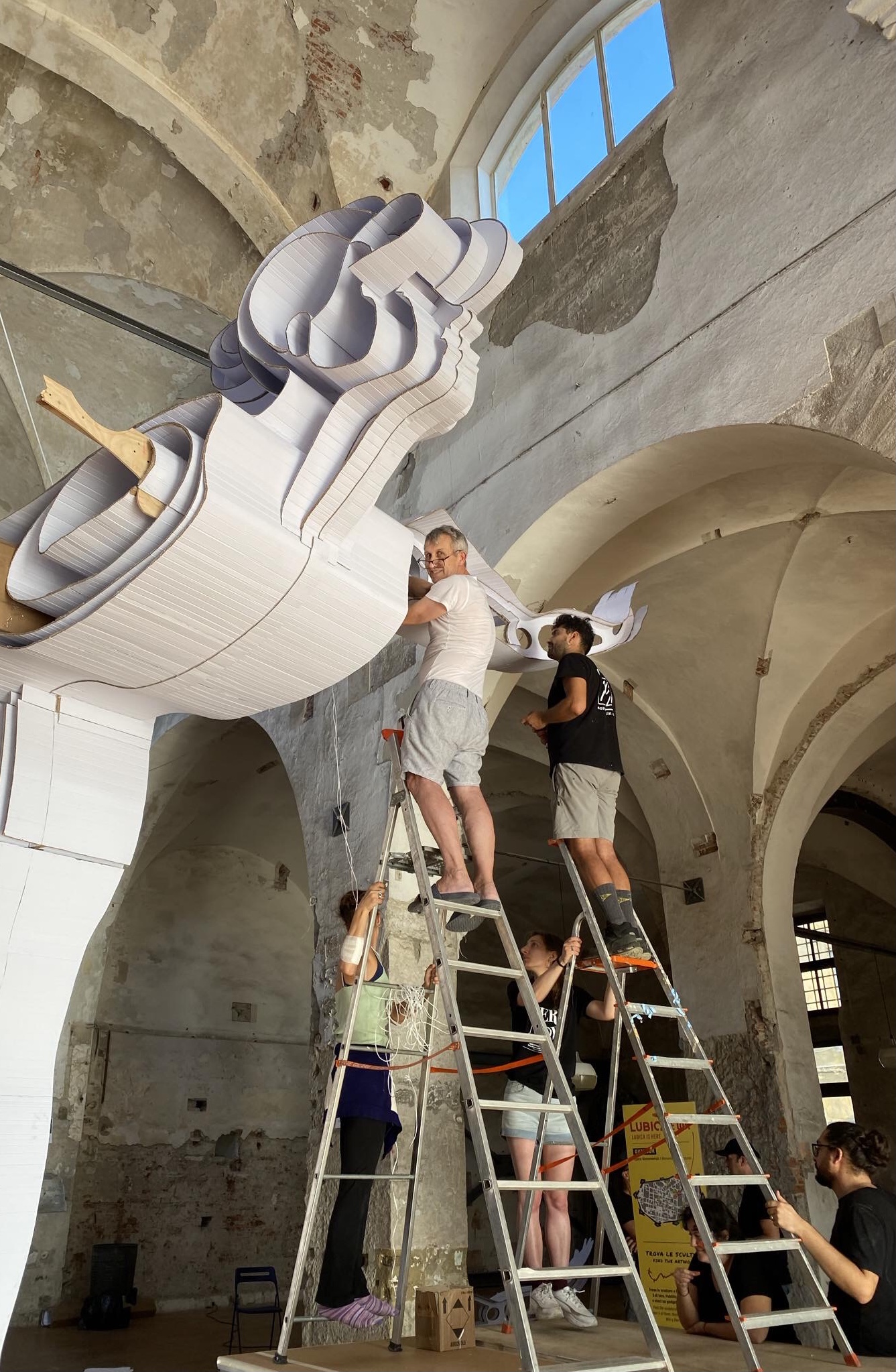
For an artist, this is an interesting time. But making sense of it is not a quick process. Especially in sculpture. So at the moment there are more ideas and projects than realised works. Among the works I have managed to realise, I would mention Lady Godiva, a sculpture I first presented by hanging it on the outside of my studio window in Kingston (it now adorns the façade of The Beach Gallery in Teddington); Social Spring, shown at the Winter Sculpture Park in London in 2022; The Tightrope Walker as part of a public art trail in Great Yarmouth and Flight of the Swallow, a work presented in different versions at Mall Galleries during last year’s annual exhibition, at the Lucca Biennale Cartasia in Italy, and at the London Art Fair in January this year. This work is about our temporal fragmentation and the fear of the future, which frightens us with its uncertainty.
Circus and Acrobatic figures appear in your work quite often. What draws you to those subjects?
For me, this is quite an unexpected question. An artist often depicts not the external surface or a narrative, but something internal — something not obvious, hidden from view. That is precisely what makes an artist valuable: their vision. It seems to me that only one of my works, The Tightrope Walker in Great Yarmouth, can be read unambiguously through the prism of circus imagery, which, among other themes, was set by the organisers of the commission. But even there, I was investing it with broader meanings. It was one of my first works in the public space of the United Kingdom, and it is very personal. At that time, it was important for me not only to address the theme of Great Yarmouth’s historical heritage, but also to establish a connection with my own past experience. This sculpture echoes my work installed in Kyiv (Equilibrium, 2014), which now resonates quite differently in another time and another space. Just as my Kyiv work was not about the circus, but about the harmony between a human being and space, the work in Great Yarmouth is not only about the circus either. It is about humanity balancing on the thin line between war and peace, about the fragility and instability of that balance.
What continues to challenge or excite you most about sculpture today?
What inspires and interests me most in contemporary sculpture are ideas. Ideas about what sculpture can be, how it can look, how it can be exhibited, what questions it can raise, and what purposes it can serve. Contemporary sculpture not only has unlimited possibilities, but, in fact, has no boundaries at all.
What does being part of the Royal Society of British Artists mean to you, and has it influenced your work in any way?
I was awarded Honorary Membership of the RBA on 1 March 2023. It was my birthday. And that felt symbolic. I understood it, first of all, as a gesture of support not only for me, but for my country, which is fighting against aggression. This inspired me, gave me hope, and instilled optimism. I wear this title with pride and remain deeply grateful to the RBA for this recognition.
Could you tell us about the work you are exhibiting in this year's RBA Annual Exhibition?
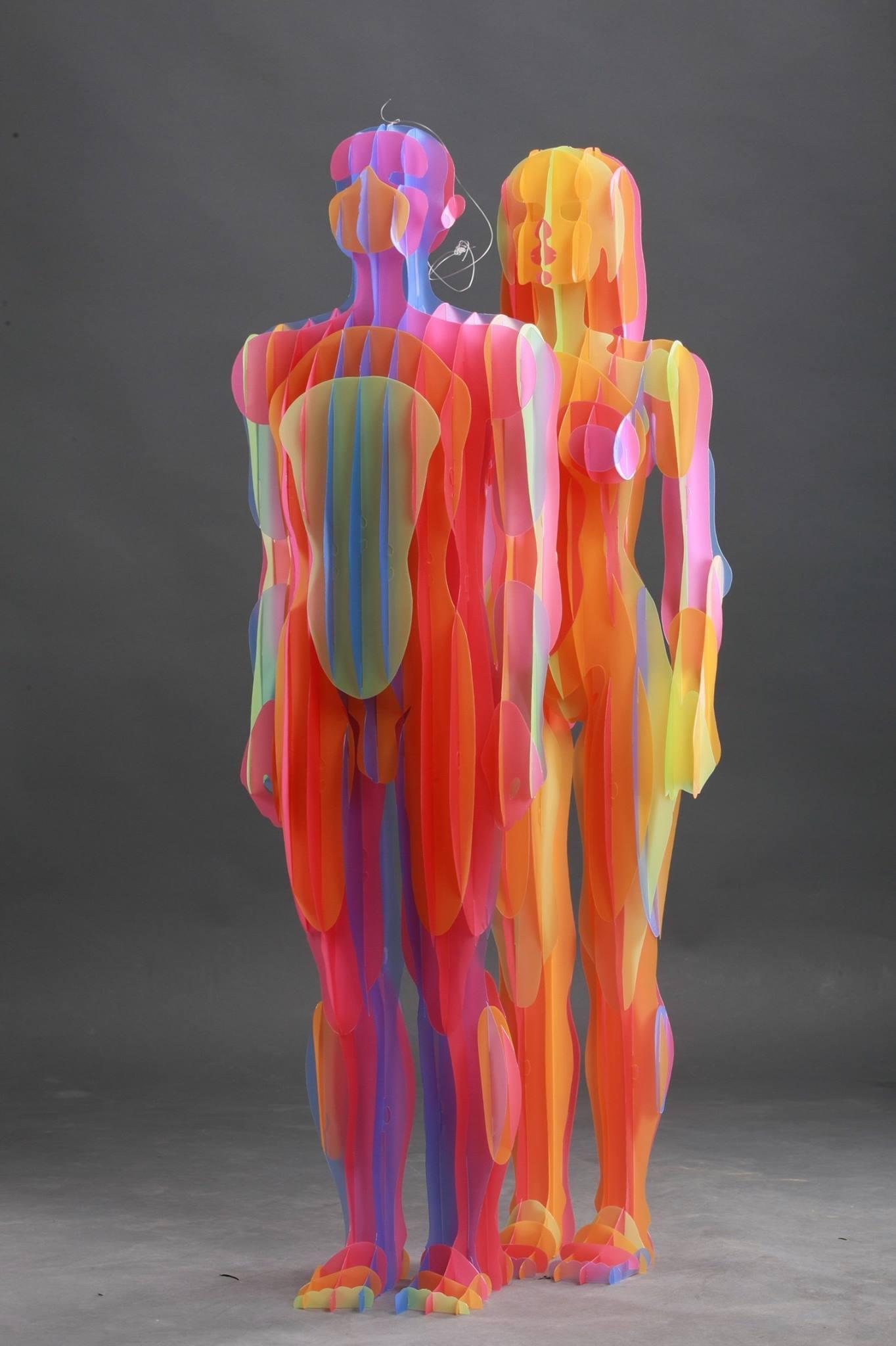
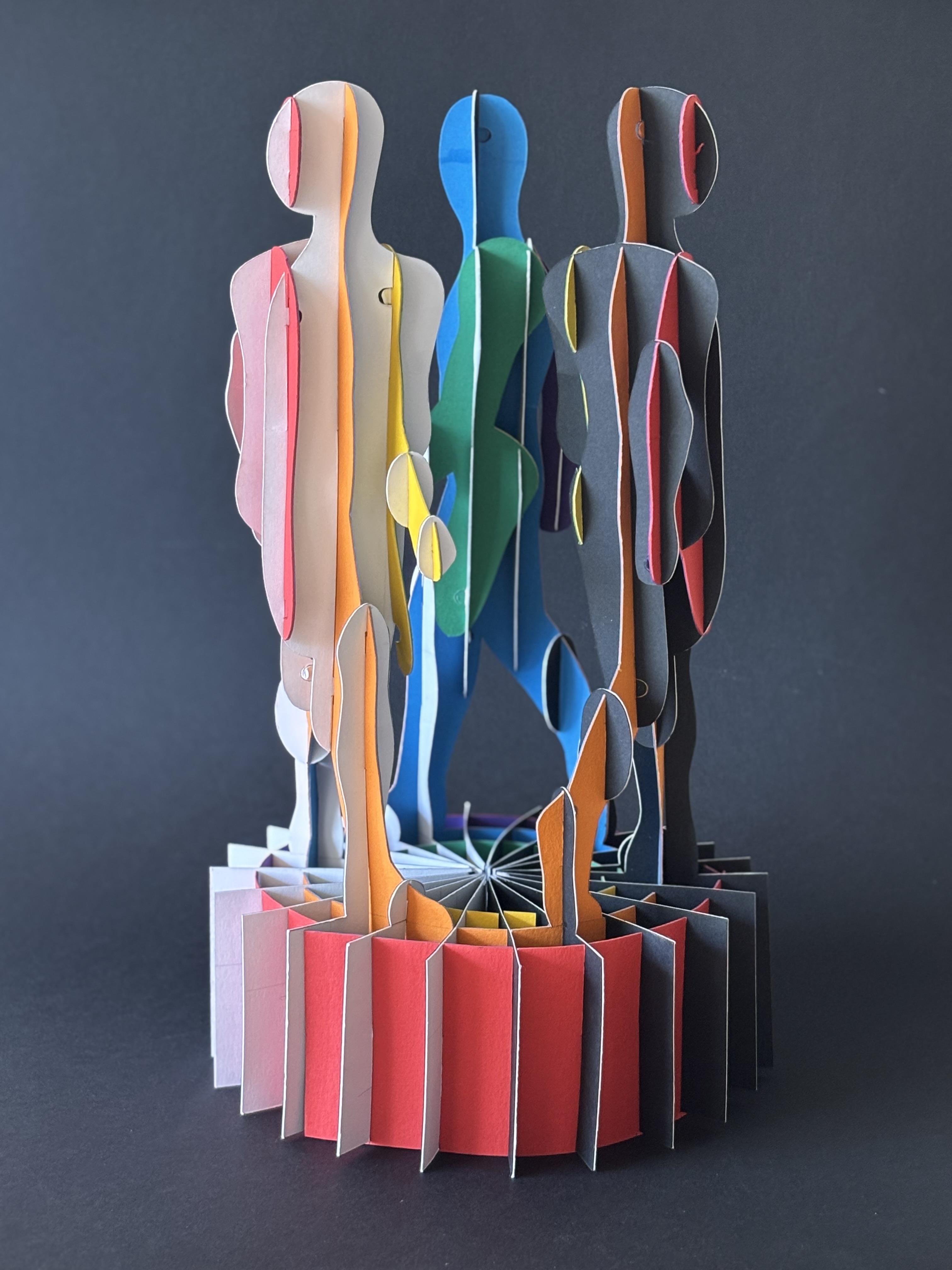
At the exhibition, I am presenting two works, the sculptural diptych Adam and Eve (2007) and a recent version of my work from the same period, Three Figures, made of paper, which I exhibited last year at my solo exhibition in Milan. A significant and formative period in my artistic history was the “paper period”, when, as a young artist with limited financial means, I created sculptures out of paper. This partly resonated both with the Soviet phenomenon of “paper architecture” and with the Italian movement Arte Povera. At that time, in my texts and media publications, I articulated ideas of the “dematerialisation” of sculpture, and paper functioned for me as a kind of substitute for material.
For the works of that period, I introduced the term “Concept-Sculpture”. These objects were intended to embody my spatial ideas, which were aimed more at photographic documentation than at existence in the material world. However, working with paper quite naturally led me to reconsider it as a material and as a cultural phenomenon. This shift was significantly influenced by my participation in the Holland Paper Biennial in 2004 in the Netherlands and the international exhibition PAPER WORKS 2006 INO in Japan, where I encountered the practices of many remarkable artists from around the world. This expanded my artistic horizons and transformed my relationship with paper, while also awakening my interest in other materials. I began working with metal and plastics, although the idea of the dematerialisation of sculpture continued to remain central to my practice, becoming less literal. I still move away from density and mass in sculpture, striving - even when working with heavy metal - to achieve the lightness that my experience with paper once gave me. As for the two works presented, they are united primarily by their use of colour and by a certain spatial paradox, which is more clearly expressed in Three Figures. This paradox lies in the multiple possible readings of the composition, in which the colour of the objects changes depending on the viewer’s point of view, and where colours gradually flow into one another, from white to black, or along the gradations of the colour spectrum. In these works, colour also cancels out, or pushes into the background, the perception of form and volume through light and shadow, constructing volume and depth instead through chromatic gradations.
Royal Society of British Artists Annual Exhibition 2026
Alex Lidagovsky's work is on display as part of the Royal Society of British Artists Annual Exhibition 2026. The exhibition is running from 26 February to 7 March at Mall Galleries.