Interview: First-Time Exhibitors at the RBA Annual Exhibition 2026
/ Royal Society of British Artists
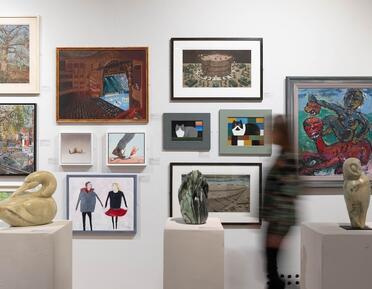
Each year, the Royal Society of British Artists exhibits the work of selected artists alongside their members at its annual exhibition, in order to demonstrate the breadth of contemporary artistic practice in the UK and abroad. We have interviewed a few participating artists, all first-time exhibitors with the Society. Each artist takes a unique approach to their craft, including assemblage, oil painting and sculpture, demonstrative of the ambitious expanse of artworks displayed at the RBA 2026.
Rick Tuck
1. Could you please tell us about the artwork you are exhibiting at the Royal Society of British Artists Annual Exhibition 2026?
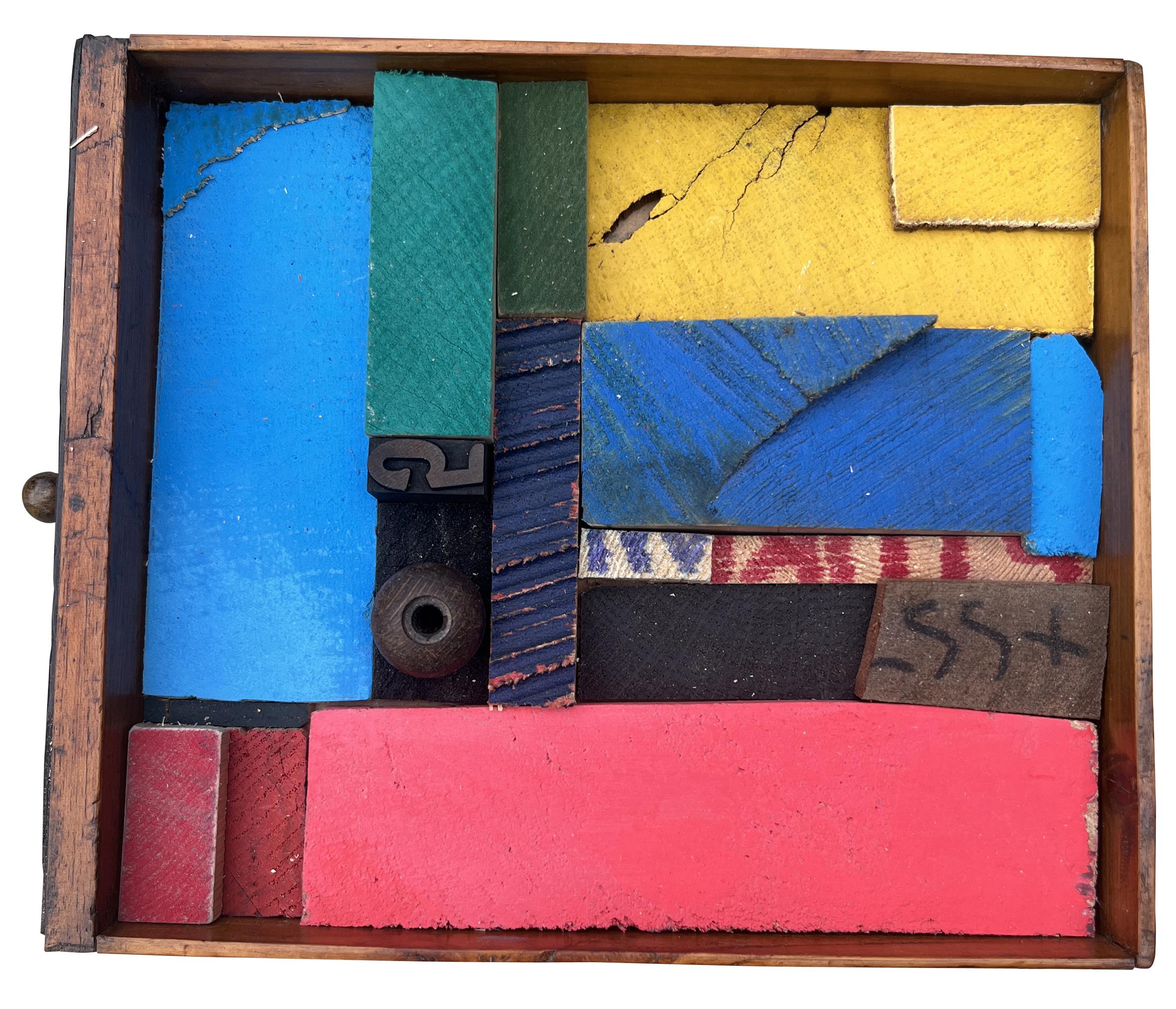
I have been looking at this small antique wooden drawer for many years. It has been lying around in my shed, waiting for the right moment. I always knew I would need it one day. It has now become a nostalgic frame for the coloured ends of wood that I recently found in a timber yard, in a work titled Five. I like the way the old numeral five and the carpenter’s circular wooden tool handle gently rest in the background and live in harmony with the coloured wood.
2. How would you describe your practice as an artist?
I am particularly interested in how ordinary, discarded, unrelated and seemingly mundane objects can be reimagined and combined to form meaningful and unified compositions. My process is intuitive and often begins with gathering objects that may be stored for years before finding their place, while others are used immediately. I rearrange and rework items until they achieve the right balance, moving from chaos to calm. I create assemblages that carry both history and a renewed sense of purpose.
3. What draws you to sculpture and working with found objects?
I studied graphic design and have a long-standing love of typography. Much of my work includes letterforms, painted, printed and three-dimensional. I have always been drawn to old objects. They seem to hold a sense of stability and continuity, offering tangible links to the past and a feeling of belonging. I feel sentimentally attached to old things as they seem to suggest permanence and longevity.
I am interested in various art movements including Dada, Abstract Expressionism, Pop Art, Nouveau Realism and Post-war British Abstraction.
4. How did you find out about the Royal Society of British Artists and what encouraged you to apply to their annual open call?
My eldest son brought this open exhibition to my attention, knowing that I am keen to show and share my work with a wider audience across the country.
Ian Wieczorek
1. Could you please tell us about the artwork you are exhibiting at the Royal Society of British Artists Annual Exhibition 2026?
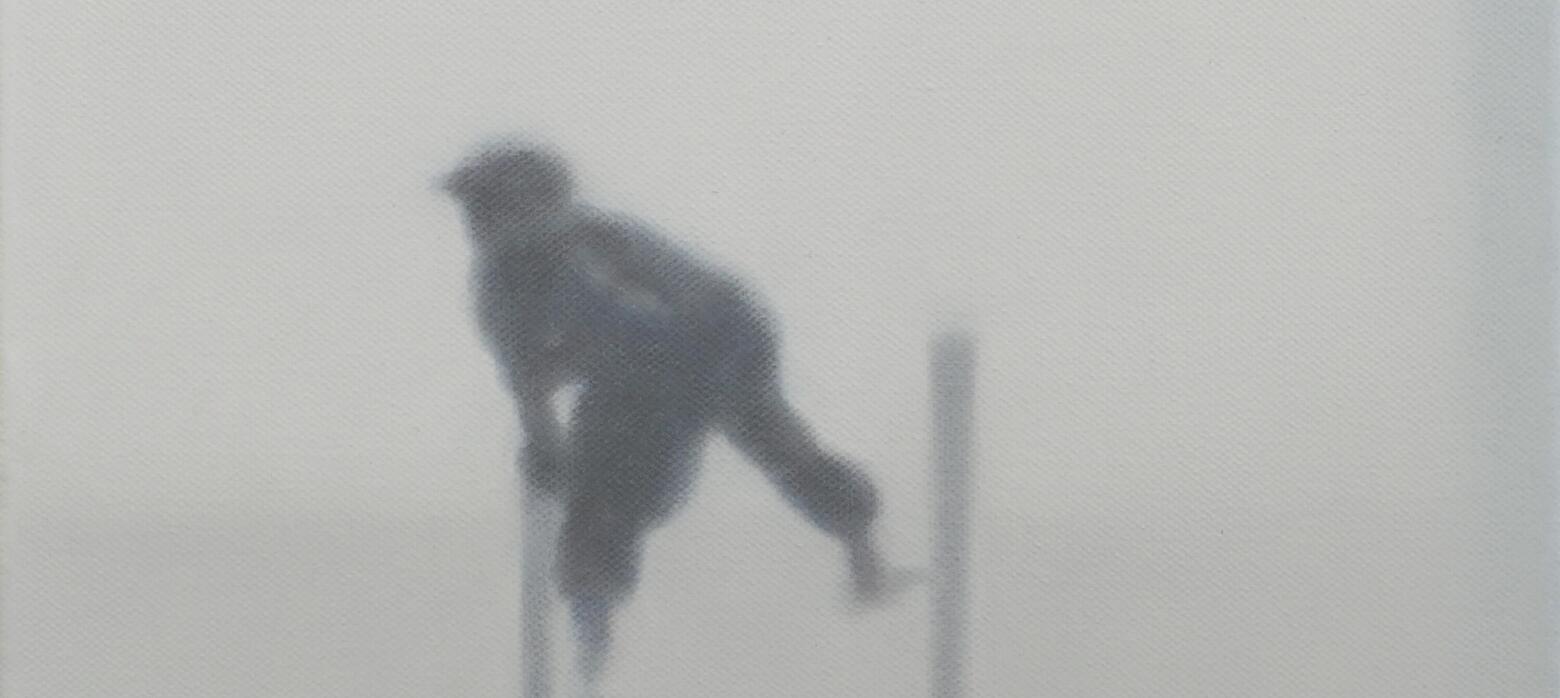
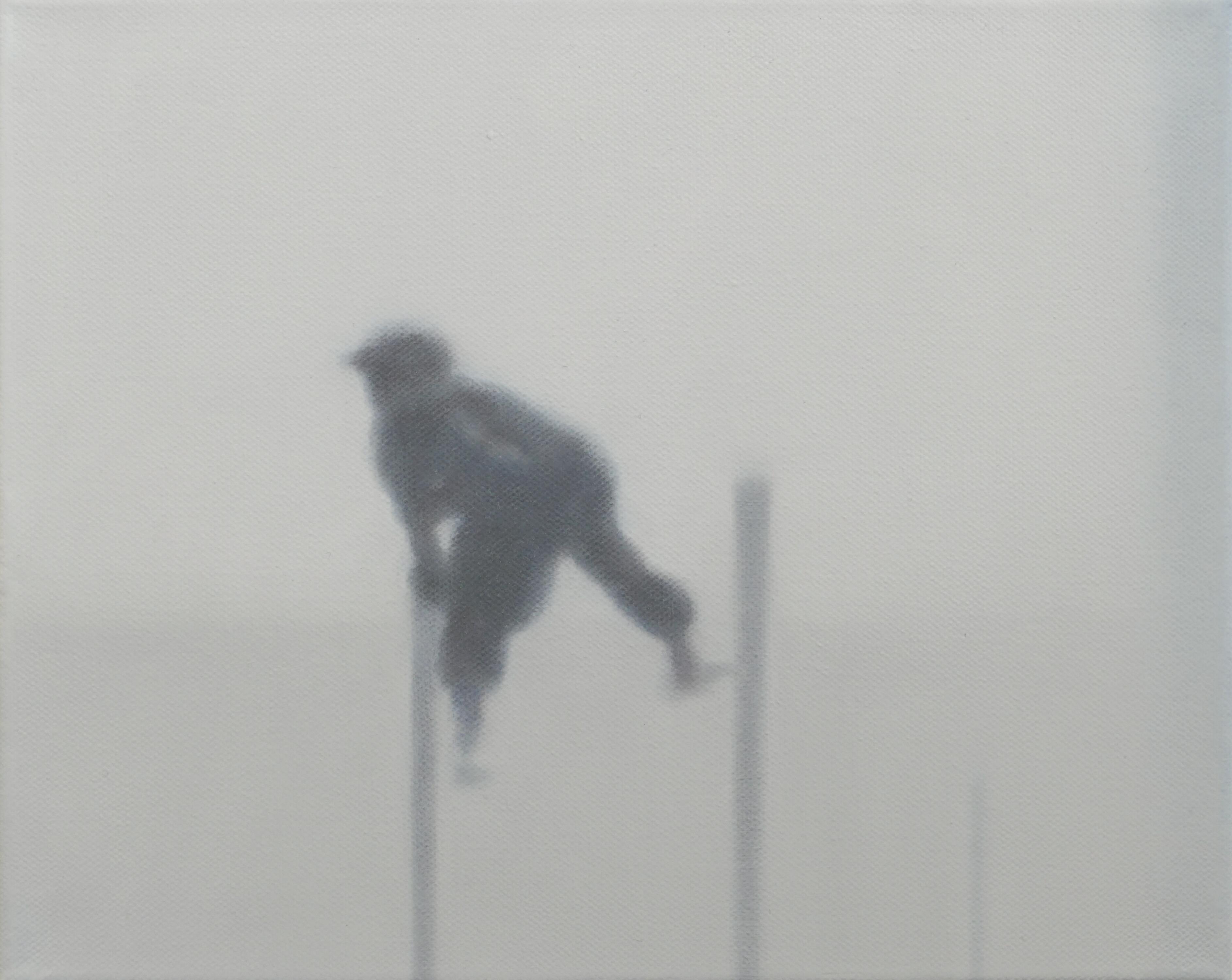
Crossing #8 is part of an extended series of paintings that reflect both recent socio-political events and a continuing narrative: the border as a physical barrier, its implications and its porosity. While the phenomenon of borders has existed throughout history, recent events have bestowed a fresh significance. Avoiding commentary of an overtly politicised nature, this work explores the border as a concept, and while the work references reportage imagery, the removal of specific context offers a more universal reflection on human resilience and perseverance.
2. How would you describe your practice as an artist?
I am a professional visual artist working predominantly in painting, as well as print, lens-based media, and installation. I am based in the West of Ireland, and have exhibited widely both in Ireland and internationally. I have also devised and curated a number of exhibitions. My work is engaged primarily with contemporary cultural experience, and the transactional relationships that exist between the individual and the global.
3. What draws you to painting and working with oils?
Oil paint offers a degree of subtlety that is a central requirement within my practice. Much of my painting technique involves the repeated build-up of many very thin layers of paint suspended in substrate medium, and while the completed painting itself presents as a very thin coating on the canvas, the interplay of the translucent layers offers a surprising sense of depth. While my subject matter often references the low-resolution imagery we experience on the internet, the use of what many might perceive as a ‘traditional’ medium also establishes an interesting dialogue with the contemporary digitally sourced material.
4. How did you find out about the Royal Society of British Artists and what encouraged you to apply to their annual open call?
I have been aware of the Royal Society of British Artists for many years, particularly with reference both to its historical lineage and its long association with many respected luminaries from the British art world. While I am based in the West of Ireland, as a British-born artist I feel honoured to be part of this year’s RBA Annual Exhibition at the prestigious Mall Galleries.
Sarah Cleaver
1. Could you please tell us about the artwork you are exhibiting at the Royal Society of British Artists Annual Exhibition 2026?
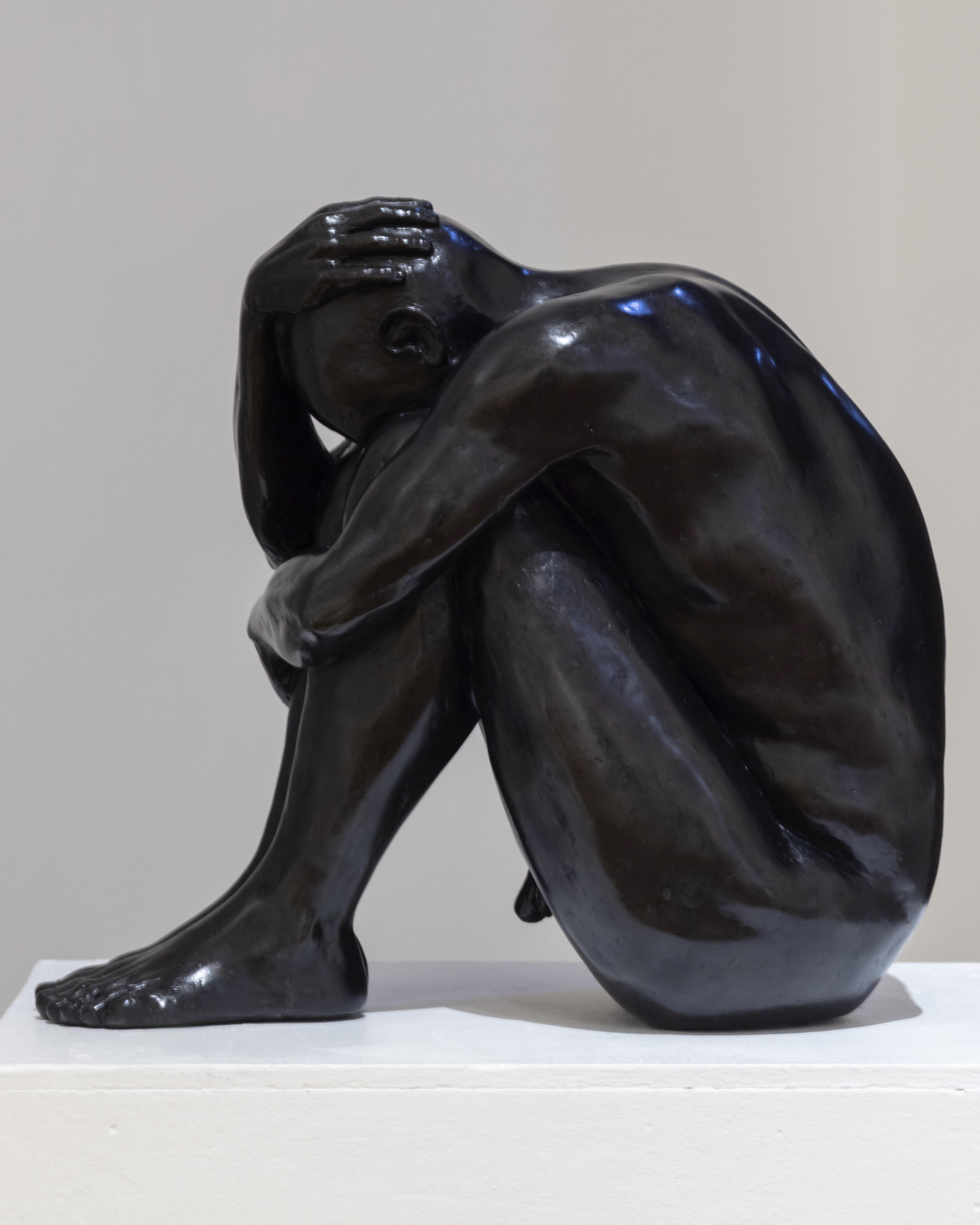
Adam, a half life-size seated figure, embodies the psychological aftermath of witnessing Eve’s transgression. His posture — one arm wrapped around drawn-up legs while the other hand covers his head — suggests self-protection, despair, vulnerability, and tension, reflecting his complicity in accepting the forbidden fruit and implying not only shared guilt, but Adam’s own conscious choice to partake.
Evolving from my long-standing interest in surveillance and the omnipresent eye, a theme I first began exploring over 20 years ago, Adam reflects the sense of being constantly watched and judged, with little or no place to hide. Applied with a rich, intense black patination to echo the darkness of the narrative and the weight of Adam’s choice, the sculpture explores the intersection of ancient theological origins and contemporary surveillance culture. In this reading, Adam confronts not only disobedience, but permanent observation — by God, by judgement, and by his own conscience. Presented here as Adam, the sculpture stands as a central pillar of the Adam & Eve series, with Eve held as an important presence within the wider body of work, inviting viewers to consider the consequences of living under constant observation.
2. How would you describe your practice as an artist?
I am a conceptual, ideas-based sculptor and multidisciplinary artist. My practice is research-driven and often rooted in narrative, shaped by concept, material, and process. Rather than working within a single medium, I allow each project to develop through an iterative approach in which the idea and the making evolve together. This process of experimentation and problem-solving ensures the final work remains faithful to its intent, and to its conceptual and visceral impact.
3. What draws you to sculpture and the process of casting?
From an early age, I have been intrigued by large-scale sculptural works, both cast and fabricated — especially the work of Mona Hatoum, Claes Oldenburg and Richard Serra. After working in the creative industries for several years, and driven to develop as a sculptor, I completed a BA and an MA in Fine Art, which focused mainly on conceptual sculptural practice. I felt I had not fully explored the human figure, so I went on to complete a year’s diploma in figurative sculpture.
It was during this time that I learned the fundamentals of casting, giving permanence to ‘original’ clay sculptures that are otherwise fragile, unsustainable, and vulnerable as an artwork. With tens—if not hundreds—of hours invested in making a sculpture from clay, I was always conscious of the risks of firing, where rapid physical and chemical changes can cause the work to crack, shatter or explode if not properly constructed, and this has shaped why casting has become such a vital part of my process. Casting, although an expensive process and carried out with the support of a professional mould maker and caster, also gives me the scope to explore a wider range of materials and surface finishes, including concrete, resin, and bronze.
4. How did you find out about the Royal Society of British Artists and what encouraged you to apply to their annual open call?
I returned to sculpture in 2025 after time away from my practice. While seeking opportunities to show my new work, I discovered The OList, a platform connecting international artists with UK open calls. Through The OList, I submitted Adam for the Royal Society of British Artists Annual Exhibition 2026, and I am honoured and humbled to have had Adam selected. Thank you.
Browse and Buy
All of the works featured in this interview are available to browse and buy online, alongside the rest of the works selected for the Royal Society of British Artists Annual Exhibition 2026.