Interview: First-Time Exhibitors at the RP Annual Exhibition 2026
/ Royal Society of Portrait Painters
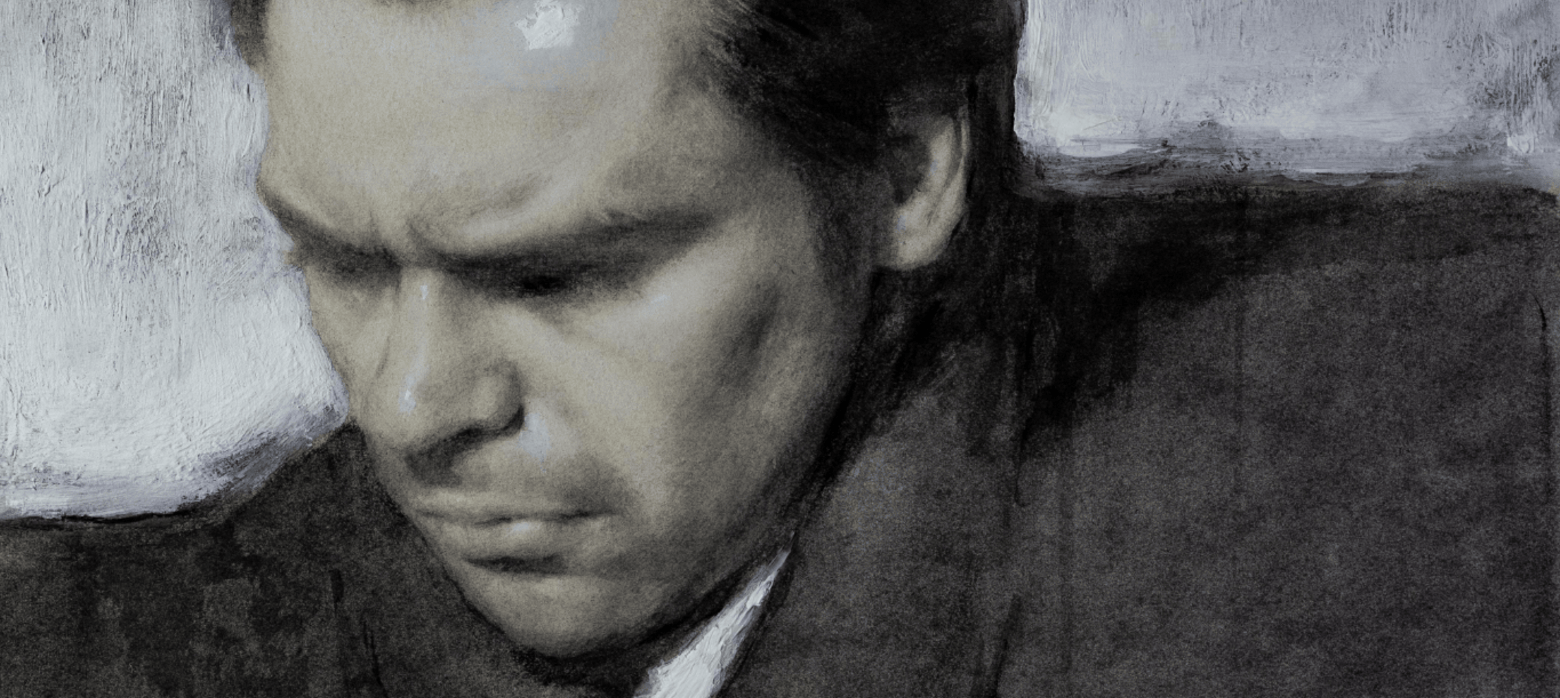
Each year, the Royal Society of Portrait Painters hosts their annual exhibition, featuring renowned and emerging talent in the genre of portraiture. The RP exhibits works by their elected members alongside artists selected from an open call to curate a show of great variety, with a global reach. This interview feature offers insight into works by three first-time exhibitors with the society. Each based in a different country, and at a different stage in their career, these artists describe their individually crafted approach to portraiture.
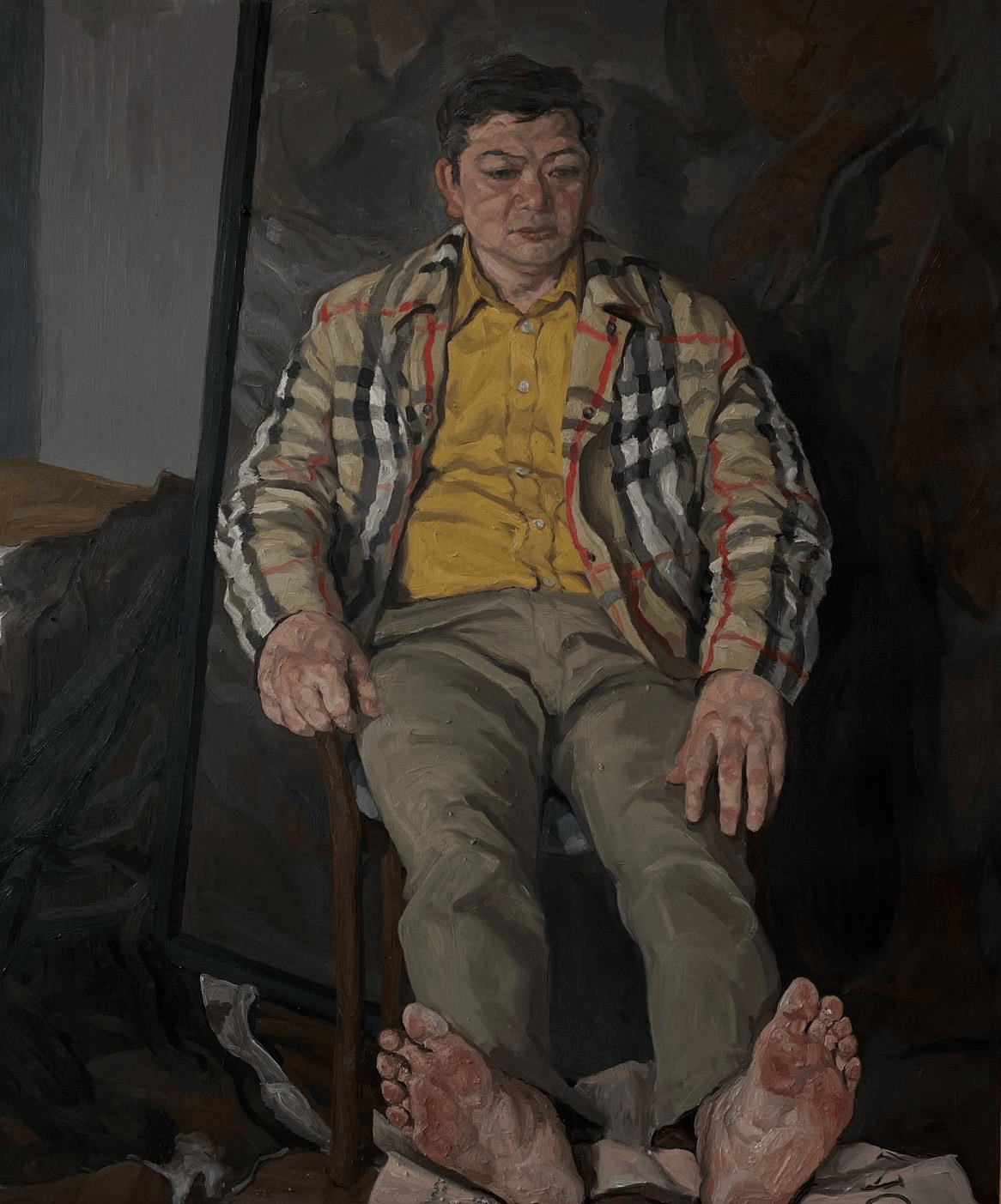
Rachata Siriyakul
1. Could you please tell us about the artwork you are exhibiting at the Royal Society of Portrait Painters Annual Exhibition 2026?
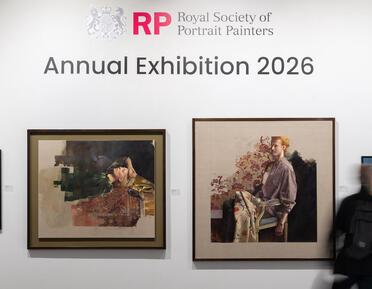
Where does the beauty of creating a work of art truly lie? Is it in the moment of completion, or in the journey that leads there? For me, it exists in having no fixed form, no plan, no rules, in moving forward until something answers the quiet hunger of instinct. It is like slowly simmering a stew, tasting and adjusting, until what stands before you begins to breathe and look back. Flesh, bone, and fabric are layered again and again until they feel more real than reality itself, so real you almost want to devour it. This is the heart of the work. The subject is Mr. Uthen Pattananiphol, a key art collector in Thailand and Southeast Asia. Over a year of working together, Mr. Uthen graciously sat for me each time. The time shared between painter and sitter has filled the piece with a deep human presence of blood, flesh, bone, and spirit.
2. How would you describe your practice as an artist?
My practice as a painter is not complicated at all. From the outside, it may look like a life of dedication and perhaps it is. But for me, it comes down to one simple thought: forget all the noise and every rule, and just paint until it begins to breathe, and you feel like you could devour it. I hold on to this as my guiding principle, and let instinct run wild. That is truly all there is. Honestly, I cannot find elaborate or beautiful words to explain what I do, what has become my way of life. By practicing in this way, every single day, I encounter something new each day. Every problem that arises becomes like a fine ingredient, adding depth and intensity to this slowly simmering stew.
3. What draws you to portrait painting?
I have been fascinated by the human condition since childhood. The human being made of blood, flesh, bone, and spirit, along with its quiet bonds to the world and other souls draws me in so deeply that I feel an urge to consume what I paint. As a Buddhist, I understand that this beautiful body will one day decay and disappear. Yet the people before me whether male or female, tall or short, thin or heavy, are profoundly beautiful to me. I have never been able to resist looking at them. I cannot deny this instinct. As for the reason behind this fascination, I must admit I cannot explain it. But perhaps that is the most beautiful part, for the moment we fully understand human complexity, and can map it out perfectly, this dish would lose its flavour.
4. How did you find out about the Royal Society of Portrait Painters and what encouraged you to apply to their annual open call?
Since my time at art college, I had long heard of the Royal Society of Portrait Painters. But to be honest, out of fear of competition and comparison, I never considered entering any exhibition. Not during my studies, or in the more than ten years since as a professional painter. It was only after I met Onalin, a senior Thai artist who encouraged and supported me, that I finally decided to submit to this exhibition. I would like to take this opportunity to sincerely thank Onalin truly; thank you. And I am deeply grateful to the Royal Society of Portrait Painters for giving me the chance to be part of such a prestigious exhibition.
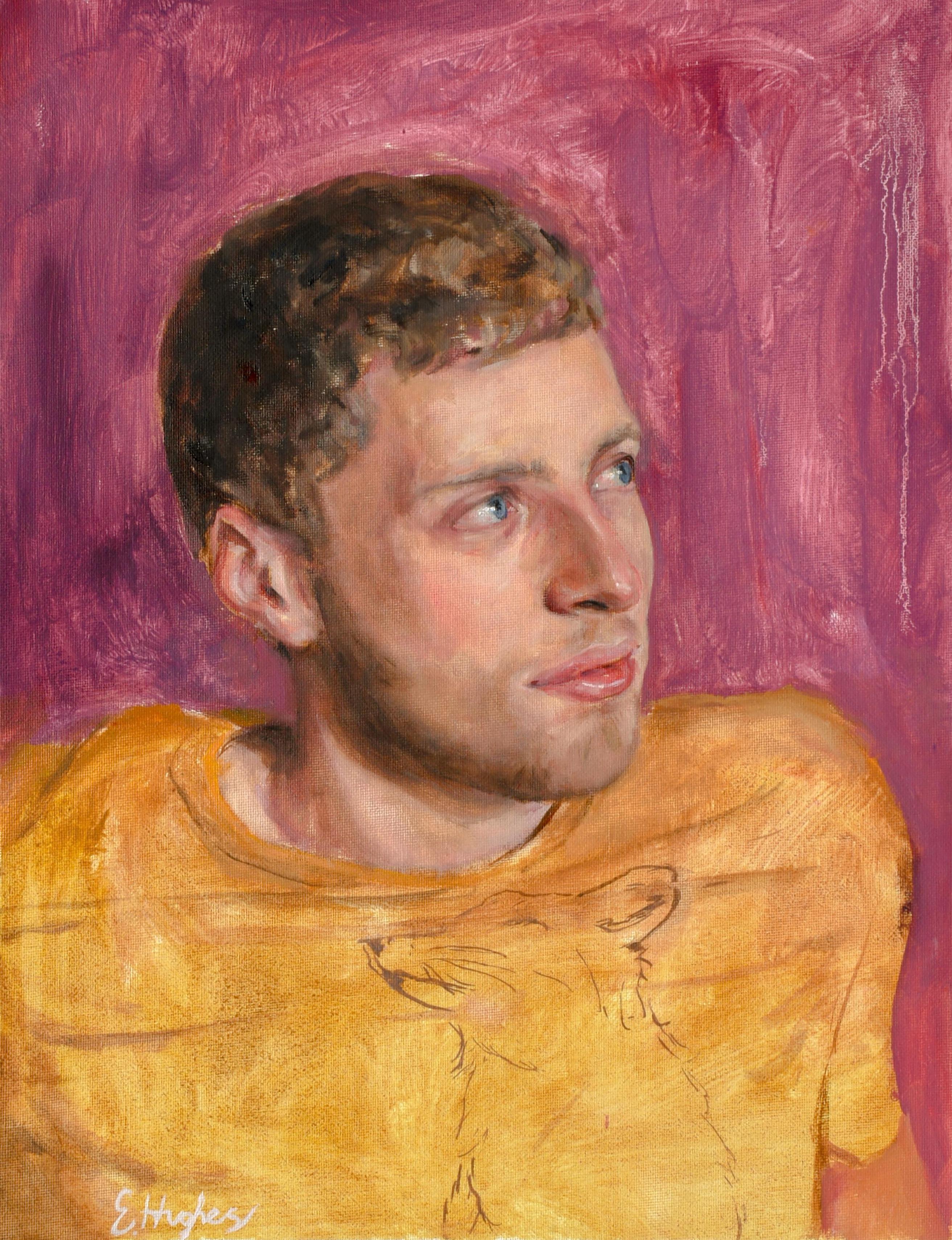
Emily Hughes
1. Could you please tell us about the artwork you are exhibiting at the Royal Society of Portrait Painters Annual Exhibition 2026?
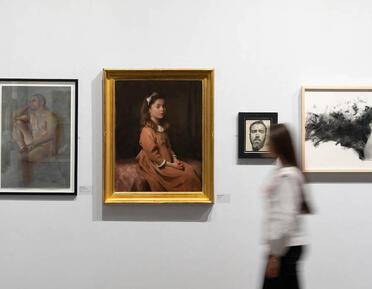
The oil painting is of Roger Barton, a friend and roommate in the 42 person student house I live in, in Zurich. The summer before leaving on a yearlong exchange to Japan, I started painting my roommates from life. Roger’s was the last portrait I made before my exchange and quickest, started just a few days before my flight. His portrait turned out to be one of my favourites and really captured his personality in an energetic way, taking only two days from start to finish. As these portraits were originally intended to be low stakes practice, they’re only on canvas paper, and had been living pinned to the wall in the lounge of the student house prior to this. The drawing is of Karim, a model from France, drawn over 5 days with 45 minute sittings, at a workshop in Lausanne.
2. How would you describe your practice as an artist?
I primarily work in oil, gouache and watercolour, painting miniature still lifes to several metre-long tapestries with life-sized figures. I love to work from life when possible and often work with objects, places, and people around me. I enjoy including playful elements in my work, either in the subject or staging, and working with bright colours, patterns, and thematic lighting. Painting is a continual evolution of technical experimentation and improvement, balancing seriousness and play. I find inspiration in contemporary art and across art history, with my strongest technical influences rooted in 19th century figurative painting.
3. What draws you to portrait painting?
I find portrait painting completely absorbing, loaded with so many different and interesting factors all at once. There's the technical challenges of chasing likeness and form, while still maintaining energy, and life. I find my favourite portraiture has a sort of highly precise looseness that comes off as almost effortless, and the chase towards this ideal goes on for a lifetime. Meanwhile, when working on the expression in later stages, I find myself trying to trick my brain into seeing a real person on the canvas then I try to read their expression and thoughts. At this stage the smallest change can feel like it makes such a big difference-this part can drive me a little crazy. Additionally, if I’m working with someone I know there's the question of how to capture their personality and your relation to them. Simultaneously, there’s a drive for experimentation with, for example, colours or paint application, and this has to exist in balance with the other factors. I find the visual world endlessly fascinating and interesting to look at, and chasing it with paint is an eternally interesting endeavour for me.
4. How did you find out about the Royal Society of Portrait Painters and what encouraged you to apply to their annual open call?
My boyfriend talked me into applying. He's a framer and he framed my work for this exhibition.
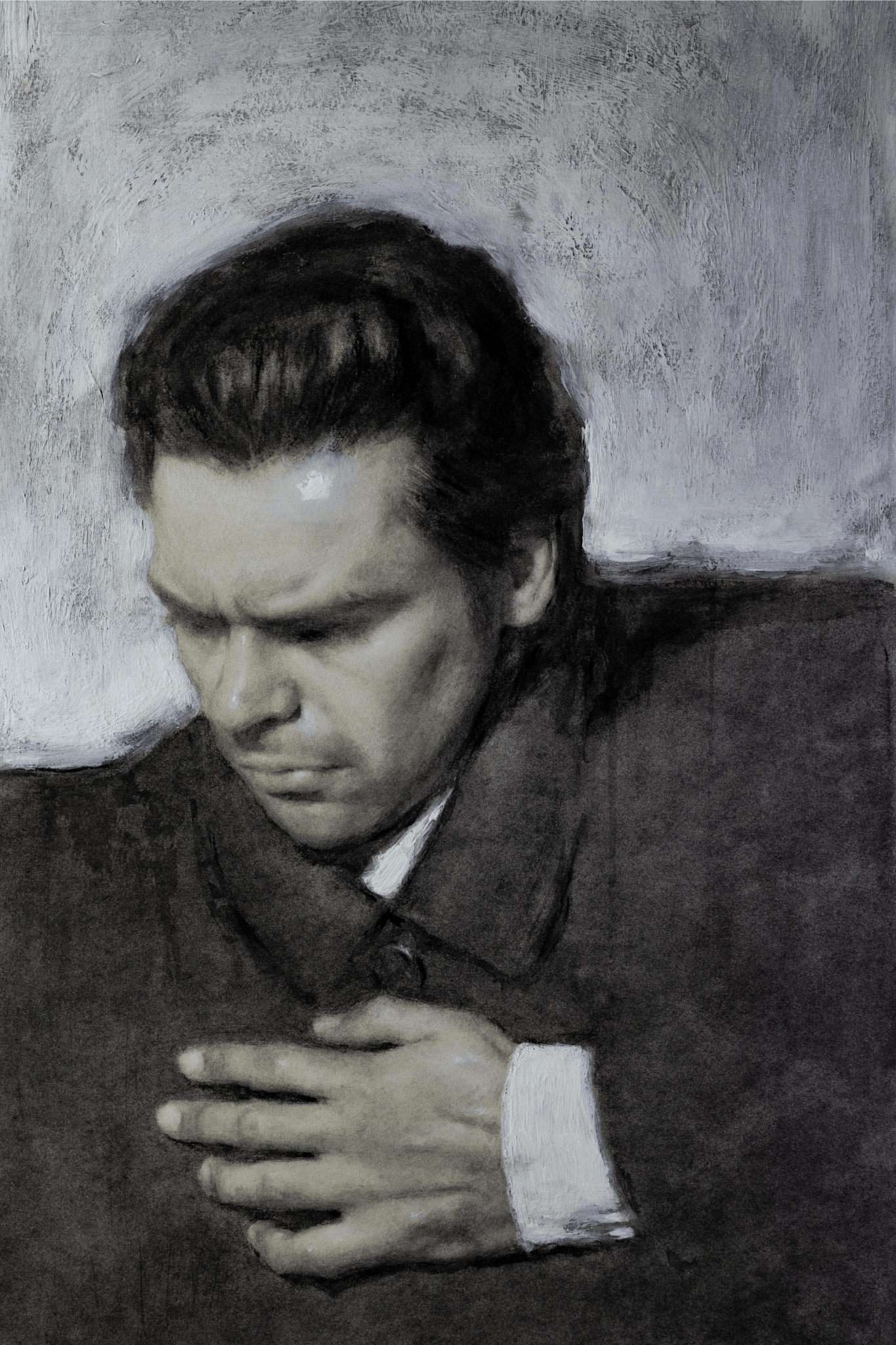
Joe Laycock
1. Could you please tell us about the artwork you are exhibiting at the Royal Society of Portrait Painters Annual Exhibition 2026?
The artwork, titled ‘Self Portrait with Hand’ is a portrait executed over a two week period early in 2026. Depicting only the head, shoulders and hand of the subject, the minimalistic composition uses straight lines, right angles and empty space to convey a feeling of stillness, weight and inner reflection. Although the drawing itself wasn’t completed until months later the image itself came to me more or less fully formed mid-way through 2025 when I initially made a rough sketch. ‘Sincerity’ is a word I think about a lot in relation to my art and it’s one I’d like to conjure in the mind of the viewer upon seeing this drawing. It’s a very honest portrait. I hope to have successfully articulated the way I felt at the time in a way that people can relate. My goal wasn’t to capture an individual per se, as is often the goal in portraiture but rather a feeling: something more universal.
2. How would you describe your practice as an artist?
Until a couple of years ago I would’ve described my artistic practice as that of a student. Being initially inspired by the old masters - Rembrandt, Velasquez, Vermeer amongst others, it was very important for me to establish a solid foundation to build on - good fundamentals; proportions, values, edges etc. However, although these things were my priority at the time, technical ability was never my end goal. More recently I have begun to diverge from the stricter, almost academic kind of study and explore a more expressionistic, imaginative sort of approach, looking to artists like Käthe Kollwitz and Munch, the classical art of antiquity and Rodin. It has been and continues to be a difficult transition, but on the occasions where I catch a glimpse of the aesthetic world I’m attempting to uncover – of which I consider this portrait to be – I find it incredibly rewarding.
3. What draws you to portrait painting?
Being a shy child and an introverted adult, always preferring my own company, it seems quite paradoxical that people would be the one thing I feel compelled to make art about. I’ve tried still life, landscapes and animals but they all leave me feeling quite bored in comparison. That being said, what draws me to portrait painting is not the immediate appearance of the individual, but the inner world hidden behind the carefully chosen outer appearance, the one behind which - if we collectively chose to remove - we would find we all have a lot more in common than we think and that we’re all far less alone than we feel. In short, what draws me to portrait painting is the desire for connection and understanding.
4. How did you find out about the Royal Society of Portrait Painters and what encouraged you to apply to their annual open call?
I’ve known about the RP for a few years now, I found it through Instagram. I was encouraged to apply by my friend and very talented artist Willow Turner. Without her encouragement I almost certainly wouldn’t have applied.
Browse and Buy
All of the works featured in this interview are available to browse and buy online, alongside the rest of the works selected for the Royal Society of Portrait Painters Annual Exhibition 2026.