Interview: First-Time Exhibitors at the RI 214th Exhibition
/ Royal Institute of Painters in Water Colours
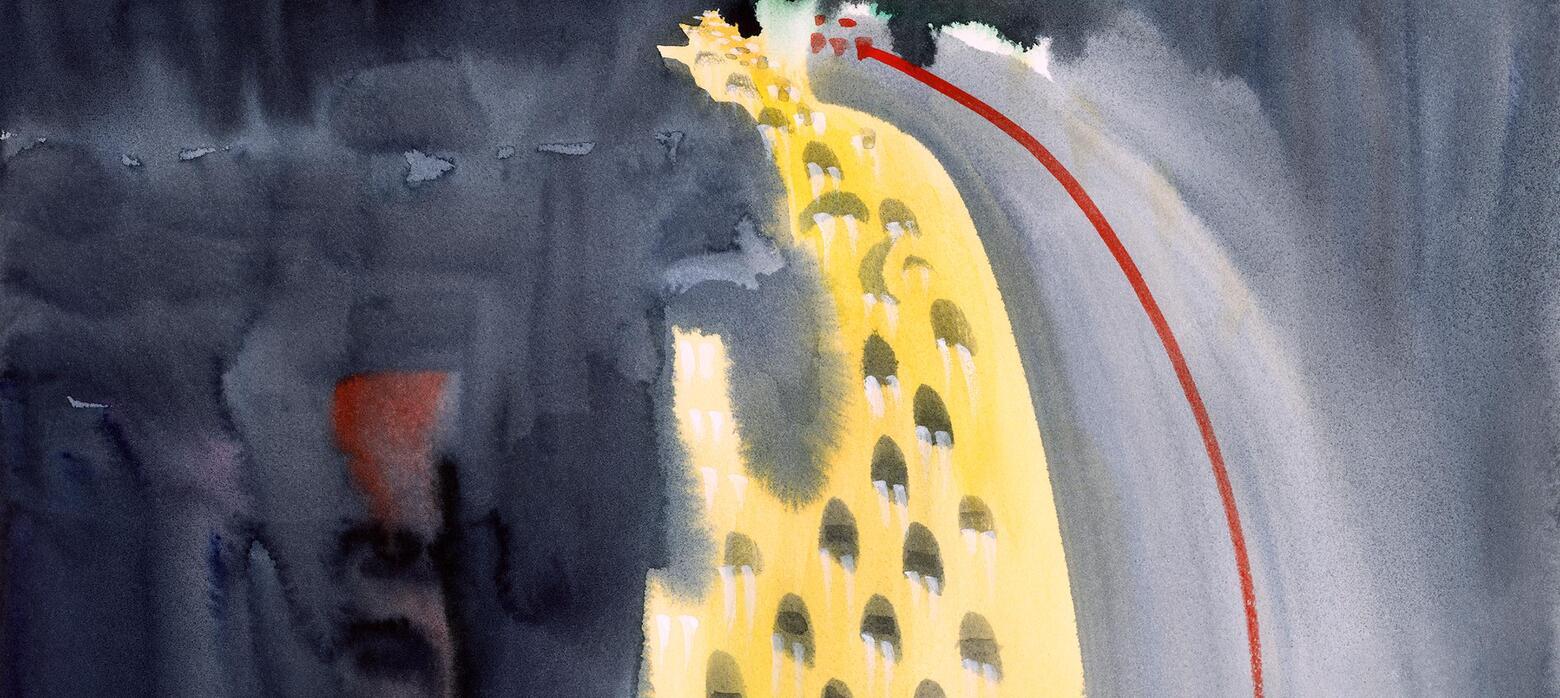
Now in its 214th year, the Royal Institute of Painters in Water Colours hosts an annual exhibition featuring over 400 of the finest contemporary watercolour and water-based media paintings from around the world. The largest exhibition of its kind, the RI exhibits works by their elected members alongside artists selected from an open call. This interview feature offers insight into works by three first-time exhibitors with the society. Each at a different stage in their career, emerging or established, these artists push the boundaries of watercolour.
Lulu Ao
1. Could you please tell us about the artwork you are exhibiting at the Royal Institute of Painters in Water Colours 214th Exhibition?
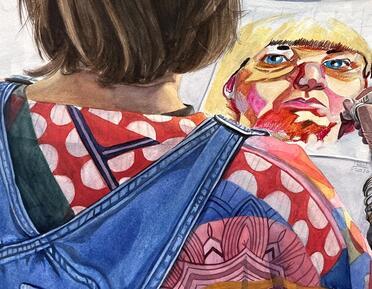
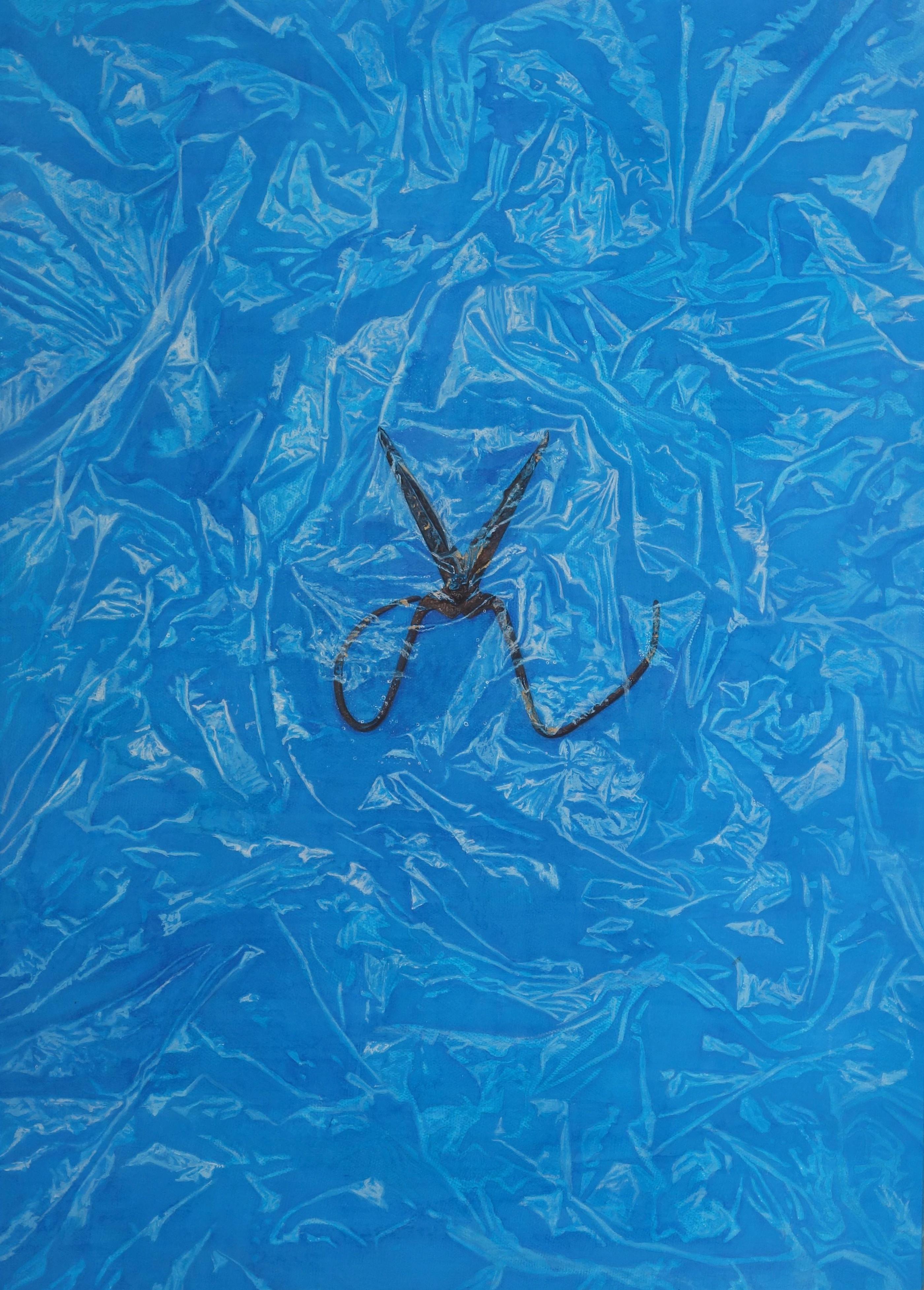
The work I am exhibiting is Blue, from my Scissors series. The image comes from a simple arrangement: a piece of plastic sheeting covering a rusted pair of scissors. I have always been interested in everyday objects, but not simply as objects themselves. I tend to approach them as something to be looked at — to be observed over time, and to experience the state they enter into through the act of looking.
There is a subtle tension in this painting, but also a kind of quiet beauty, especially in the way the plastic catches and reflects light. I hope the painting carries a sense of stillness, almost a kind of spiritual presence, while at the same time suggesting that time is passing and light is constantly changing.
2. How would you describe your practice as an artist?
I have had many years of training in painting, and my practice has always developed from painting.
What runs through my work is how we look and how we perceive. I am interested in how painting can hold very subtle states of looking, as well as the emotional condition of the painter, and how these states gradually take shape. I also think painting involves a certain kind of labour, and the image unfolds slowly, both in the making and in the viewing.
For me, my work is about how we look at the world, and whether painting can slow that down or shift it in some way, making us aware of what might otherwise go unnoticed. Alongside painting, my practice also extends into installation, experimental animation, and mixed media.
3. What draws you to working with watercolour and water-based media painting?
Watercolour and water-based media are light and transparent, and I am drawn to these qualities. At the same time, I am interested in exploring the limits of the medium while remaining true to its nature.
I use a method similar to tempera, building the image slowly through layers of washes. Colour is not applied all at once but gradually stained into the surface. Rather than remaining on the surface, it accumulates within the painting and creates subtle internal shifts. It feels as if something is moving within the image, with a sense of depth and luminosity emerging from the layers. It has its own vitality.
I also feel that water itself has a kind of intelligence. It moves, spreads and settles in its own way, opening up many layers of possibility. As an artist, I need to guide and control it, but I cannot fully fix it. For me, painting is not only about controlling the image, but also about responding to the material. I often feel that I am in dialogue with the pigment, the paper, and the water itself.
4. How did you find out about the Royal Institute of Painters in Water Colours and what encouraged you to apply to their annual open call?
I have visited exhibitions at Mall Galleries before, so I have been aware of their open calls for a while. When this one came up, I saw it and decided to apply.
The Royal Institute of Painters in Water Colours is widely recognised internationally as one of the leading exhibitions for watercolour and water-based painting, representing the highest standards in the field. I have been working with water-based media for a long time, and this area of my practice has developed steadily over time, so the direction of this call felt close to my work.
It felt like a context where the work could sit well and be properly seen and understood. I was also interested in being part of a wider conversation with other artists working with watercolour and water-based painting. I was very pleased to be selected for the exhibition.
Mary Anne Aytoun Ellis
1. Could you please tell us about the artwork you are exhibiting at the Royal Institute of Painters in Water Colours 214th Exhibition?
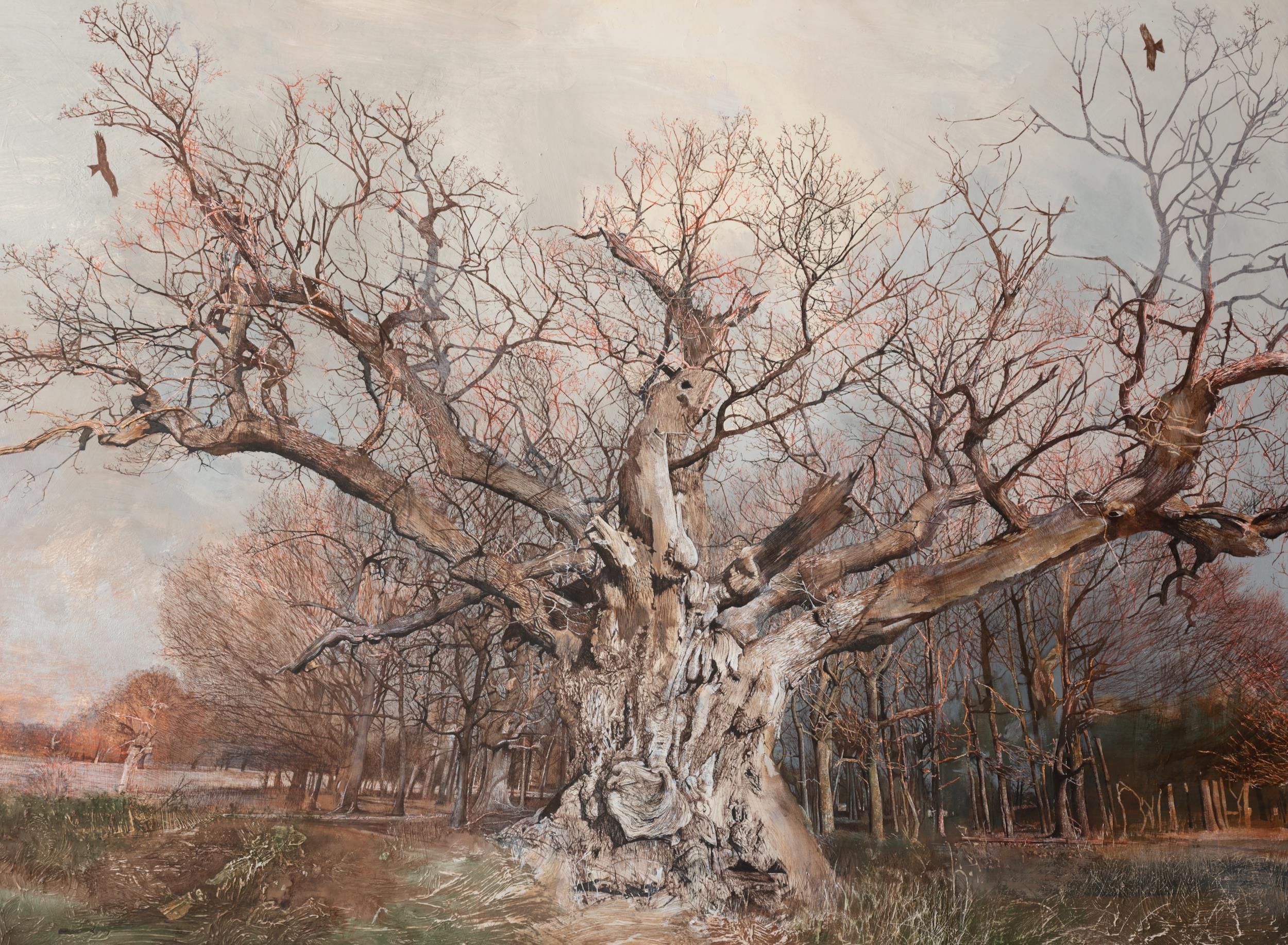
The oak tree in this work, Oak is an ancient thousand year old tree. Centuries of pollarding, a practice which greatly adds to the longevity of a tree, have resulted in its characteristic ‘knuckle’ crown, and great gnarled trunk. I wanted to draw/paint it in its rare, wood pasture setting and to try to capture something of its huge presence and complexity. The painting evolved over about six months with repeated visits drawing from life, initially in pen and ink and gesso on paper pinned to a board. As it grew in size I added more paper, eventually glueing the 4 or 5 sections onto gessoed board and introducing watercolour and egg tempera in multiple glazes and layers back in my studio.
The drawing, February, Ancient Limes is of two rare ancient small-leaved lime trees. I began the drawing early morning in late winter with scarlet elf-cups studding the ground and the first scent of spring in the air. At least a thousand years old the two trees have fused together over centuries with extensive ropes of ivy binding their trunks and branches. Sitting just a few feet from them drawing for hours and days and weeks was a memorable and humbling experience.
2. How would you describe your practice as an artist?
My work is rooted in the natural world and in the soil, plants, trees and creatures of the fields and woods. I am interested in the quiet, small things and places which exist all over our countryside but which are so often overlooked and ignored. For me these places are like a microcosm of the vast web of nature globally and, in exactly the same way, they have never been more vulnerable to unsustainable ‘development’, urban sprawl and climate change. In painting them I am attempting, in my small way, to show how much these places matter and how urgently they need protecting.
I work slowly, my paintings evolving over many months and often years. They grow from a combination of intense observation, memory and imagination. I build up layers of glazes in egg tempera with watercolour and gesso, combining areas of intense pen and ink drawing with looser textural mark-making. The process itself is a metaphor for the layers of time, growth and experience which my work is about.
I have always worked on collections of paintings which I exhibit as solo exhibitions every 3-4 years. I am currently represented by John Martin Gallery, London.
3. What draws you to working with watercolour and water-based media painting?
I have always worked in watercolour, inks and egg tempera and over the years have developed a very personal method of combining these water-based mediums to convey what I want to say. My process is always evolving and not fixed, something which I feel is vital in order to keep work fresh and to embrace chance and the unexpected.
4. How did you find out about the Royal Institute of Painters in Water Colours and what encouraged you to apply to their annual open call?
I have received invitations to apply to the Royal Institute of Painters in Water Colours exhibition for several years but have not had works available to submit until this year.
Daseul Lee
1. Could you please tell us about the artwork you are exhibiting at the Royal Institute of Painters in Water Colours 214th Exhibition?
I was fortunate to have two works selected for the exhibition.
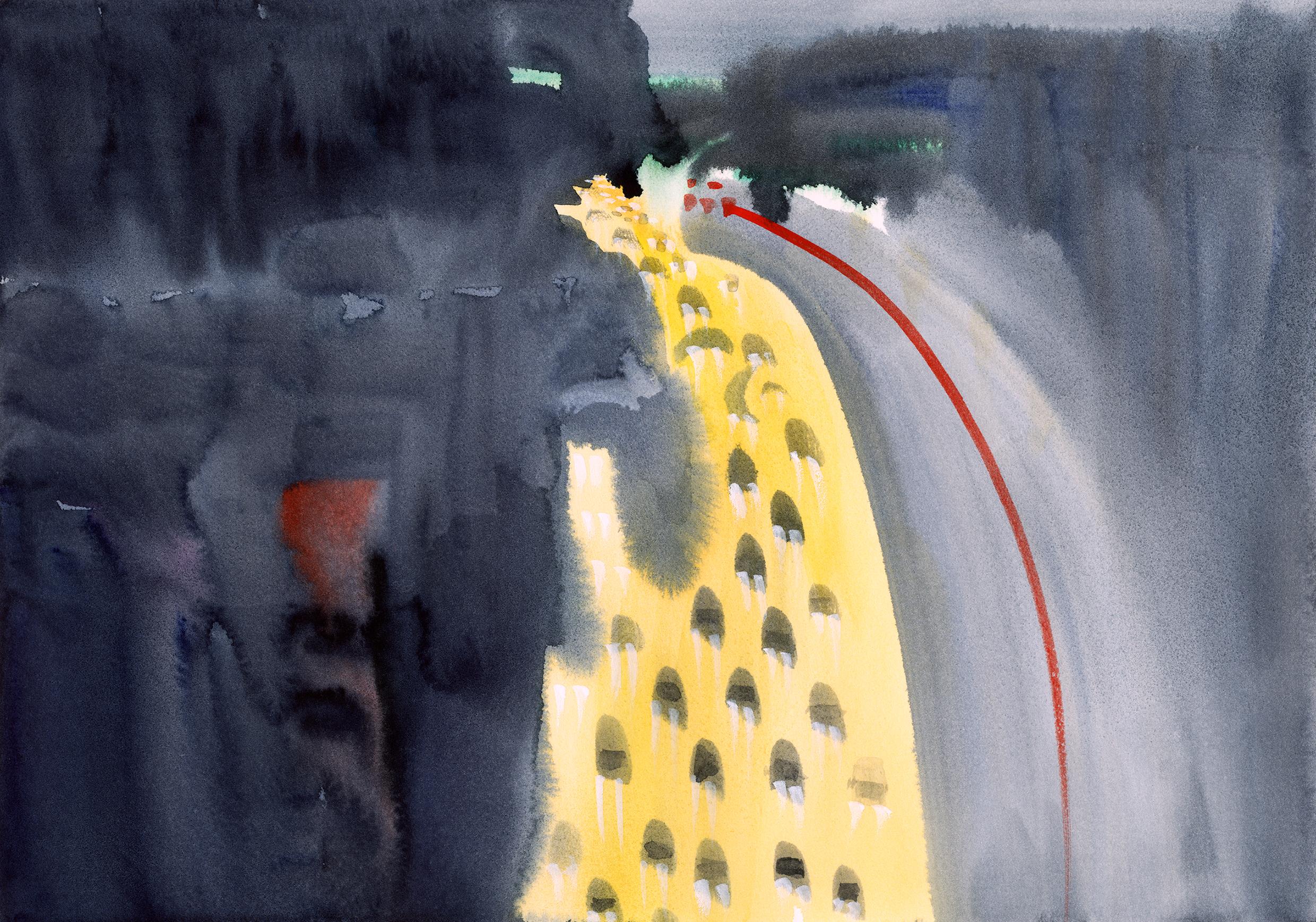
A Path of Light was inspired by the view from the window beside my desk. In front of my home there is a large junction leading to a motorway, and during the evening rush hour a stream of cars with their headlights on flows steadily in one direction. It is a quiet but moving sight – small lights travelling home from their workplaces. From a distance the lights almost resemble a river or a small galaxy. I wanted to capture that gentle, flowing moment.
The Air of The Morning reflects a calm suburban morning. I hoped to convey the stillness and freshness of the early air, as if the sky itself had only just woken.
2. How would you describe your practice as an artist?
My work often begins with an interest in the sense of vitality that exists within places, objects and quiet moments. I do not always think of vitality as something dramatic or powerful; sometimes it appears in a much more subtle way, quietly shimmering in a still environment. I find myself particularly drawn to those understated moments.
Certain impressions of light or atmosphere feel so delicate that they must be captured before they fade from memory. Because of this, my process relies greatly on intuition. The moment before the brush touches the paper is often when the image feels most vivid in my mind. Once the brush meets the surface, however, things rarely unfold quite as planned. Rather than resisting this, I tend to follow the flow of the painting, almost as if searching for the path of water. That sense of movement and discovery is something I deeply enjoy in my practice.
3. What draws you to working with watercolour and water-based media painting?
Like all materials, watercolour has its own character, but I often feel it resembles the behaviour of nature itself. It is fluid, responsive and sometimes unpredictable, yet it also follows very natural principles as water and pigment move across the paper.
One of the moments I enjoy most is stepping back and allowing the paint to settle and change on its own. Quiet transformations take place – pigments spreading, settling, softening or fading as they dry. Eventually there is the moment when the paper is completely dry and the final result reveals itself. If the outcome matches my intention, I feel a sense of relief. When it does not, it can still bring unexpected discoveries: a colour emerging in an unplanned place, or pigment travelling further than I anticipated. I imagine many watercolour painters share this small sense of surprise and curiosity.
4. How did you find out about the Royal Institute of Painters in Water Colours and what encouraged you to apply to their annual open call?
My background is in design and illustration, which is the field I have mainly worked in. In painting, however, I have often felt like someone standing just outside the door, still finding my way. In my home country, Korea, very few people were familiar with my work, and I was unsure how to begin creating opportunities for it.
One day, while browsing artists’ work on Instagram, I came across a post announcing the open call for the Royal Institute of Painters in Water Colours. It was the first time I had encountered the organisation, which shows how new I still was to that world.
The application process felt straightforward, and the idea of submitting to an exhibition dedicated to watercolour — a medium I truly love — immediately excited me. Sending my work from Korea to London felt like a small adventure, and looking back, I’m very glad that I decided to take that chance.
Browse and Buy
All of the works featured in this interview are available to browse and buy online, alongside the rest of the works selected for the Royal Institute of Painters in Water Colours 214th Exhibition.